
Importing goods from China? Choosing the right freight forwarder can differentiate between a smooth, cost-effective shipping experience and a frustrating logistical headache. With thousands of freight companies offering varying service levels, navigating the options can be overwhelming, especially if you’re unfamiliar with China’s shipping landscape, regulations, or customs processes.
This article is not a list of what a good forwarder should have. It is a verification procedure — how you can confirm, step by step, that the company in front of you can actually do the job. The examples use Africa and Middle East lanes, but the method applies to any destination.


What a Freight Forwarder Actually Is
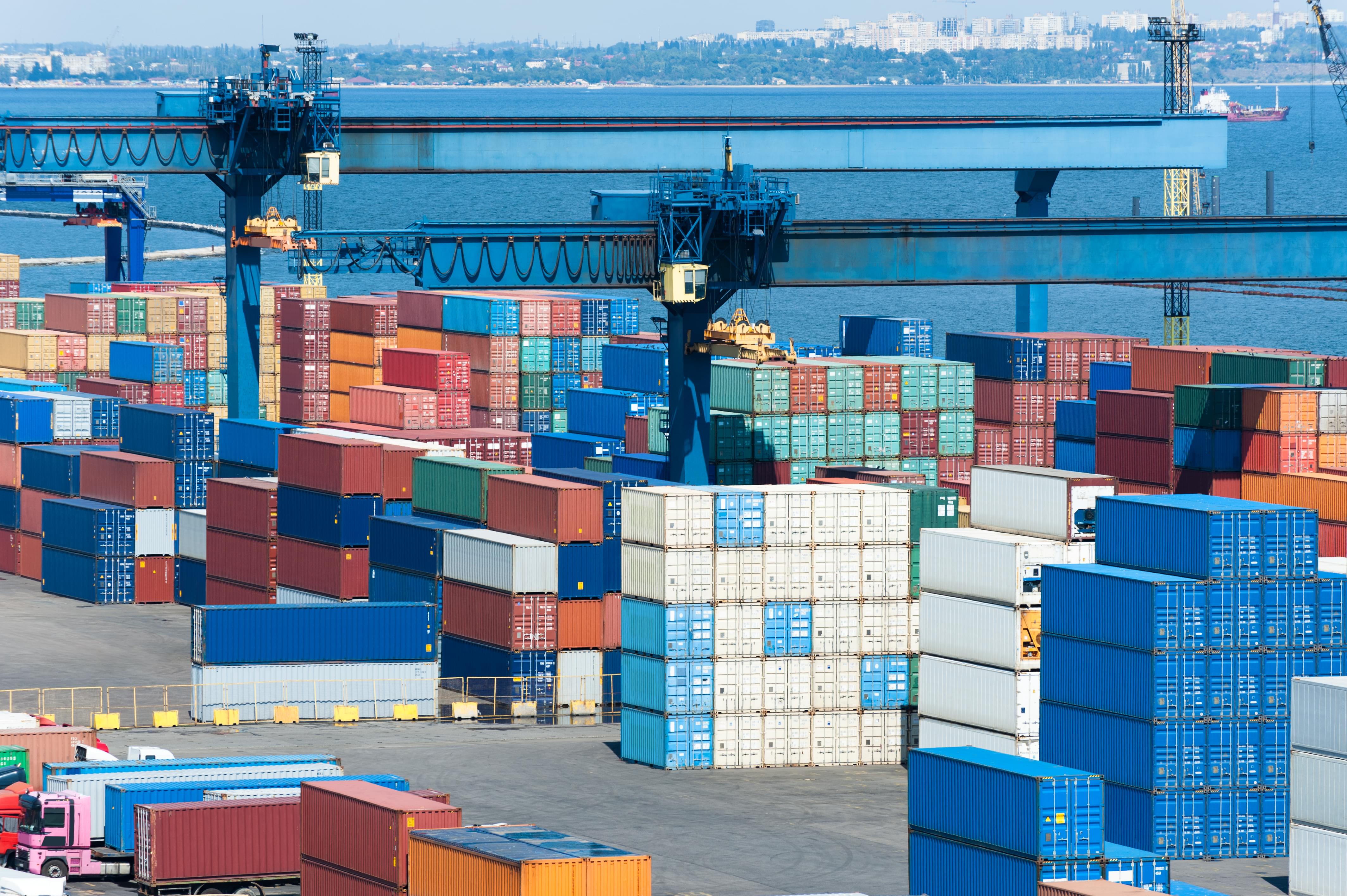
A forwarder handles mode selection and booking, full documentation (bills of lading, commercial invoices, packing lists, certificates of origin), export and import customs declaration, consolidation and deconsolidation, destination coordination, warehousing and last-mile delivery, cargo insurance, and shipment tracking.
But the more useful framing is this: **a forwarder is the party that takes over logistics responsibility**. If space falls through, documents go wrong, or destination handoff fails, the forwarder is your first point of accountability — provided you selected a company that can genuinely carry that responsibility, not just forward quotes.
The Six-Step Verification Method
Step 1: Check Credentials
- NVOCC registration: For ocean freight, a registered Non-Vessel Operating Common Carrier in China can be checked through the public channels of the Ministry of Transport. NVOCC status means the forwarder can issue its own House Bill of Lading, giving you a clear contracting party when problems arise.
- Freight forwarding business registration: Verifiable through local commerce authorities or industry associations.
- AEO (Authorized Economic Operator) certification: Granted by customs authorities after an audit of compliance records and internal controls. It does not by itself mean great service, but it indicates the company has passed a systematic compliance review — low-trouble forwarders usually win here first.
If credentials cannot be verified, skip the rest of the steps.
Step 2: Ask Compliance Questions
You do not need to understand customs yourself. Send these three questions, using Africa/Middle East examples:
1. "My goods go to Lagos, Nigeria. What must the consignee arrange first, and who handles Form M?" A knowledgeable forwarder will explain that Form M is opened by the Nigerian importer through its local bank, while the forwarder handles SONCAP and bill of lading coordination. A vague answer — "we can handle everything" — means they haven't.
2. "LED lighting to Saudi Arabia — when and how is SABER certification done?" A real answer mentions the PC/SC two-stage certificates and that the SC must be issued before shipment.
3. "Any requirements for my wooden crates?" A proactive mention of ISPM 15 heat-treatment marks signals that packaging compliance is routine, not damage control.
Judge the specificity of the answers. Companies that have actually run the lane answer with processes; companies that haven't, answer with adjectives.
Step 3: Ask for the Destination Footprint
"We have a global agent network" is the most overused sentence in this industry. The useful question is: "Who actually clears my cargo in Lagos, Mombasa, or Jebel Ali? What is the company's name? Who do I contact when something goes wrong?"
- A forwarder who names the destination handler, the length of the partnership, and the handoff process has a real network.
- One who says "we have arrangements" is most likely finding a local agent on the spot — and when trouble comes, blame travels in both directions.
This matters most on African lanes, where destination clearance environments are complex and agent quality varies. Whether the destination footprint is solid matters far more than a few dollars of origin-side rate difference.
Step 4:Get Peer References
Ask for two or three current customers who ship on your lane with similar cargo, and ask them three things: shipping frequency, what went wrong, and how it was resolved.
The value of a reference is not "their service is great" — it is the evidence of problem response: how fast a solution came after a rollover, who followed up during a destination inspection, whether abnormal charges were flagged in advance. References that include concrete handling stories beat any brochure.
If the other party is unable to provide the list, as a fallback, ask for the following three items: ① Bill of lading numbers for the same route over the past six months (they can be redacted; you can verify their authenticity on the shipping line’s official website); ② The name and landline number of the handling agent at the port of destination; ③ A timeline of how the issue was handled (when the problem occurred and when a solution was provided).
Step 5: Run a Trial Shipment
Before handing over your main business, send one small LCL consignment or one non-urgent FCL load. Watch four things: whether the invoice matches the quote, whether communication on exceptions is proactive or reactive, whether documents are right the first time, and whether the same person follows the shipment end to end.
The point of a trial is not the cargo value — it is verifying the communication mechanism at minimal cost. Before your main volume is committed, no amount of questioning reveals the truth; one small shipment does.
Step 6: Itemize the Quote
Require every quote line by line: ocean freight, origin charges (customs declaration, documentation, handling), destination charges (clearance agency, deconsolidation, terminal and storage), and insurance. Confirm two things: currency and validity period, and whether destination charges are prepaid or collect.
The purpose of itemization is not haggling — it is revealing structure. Companies with clear quote structures usually have clear internal processes. An all-in "package price" typically means cost disputes are deferred to the destination port, exactly when you have the least negotiating leverage.
Who Does What:
Incoterms and the Forwarder's Role
Before selecting a forwarder, confirm the trade term of the shipment — it decides who pays freight, where risk transfers, and whom the forwarder ultimately serves:
- FOB: The buyer nominates the carrier. The seller's obligation ends with delivery at the named place and export clearance. What the seller needs may be only local services — customs declaration and terminal handling — not full transportation.
- CIF/CFR: The seller pays freight to the destination port, but risk transfers at the origin port. The seller books and insures; the buyer clears and takes delivery.
- DDP: The seller completes destination import clearance and duty payment under its own name. Note this is the most demanding term — for example, Nigeria's Form M can only be opened by a Nigerian import entity through its local bank, so enforceable DDP requires the forwarder to have usable import-entity resources at destination. A DDP quote that looks unusually low usually means an unconventional routing, with the risk arriving later.
Aligning the trade term with the forwarder's role eliminates most of the "who was supposed to do that" disputes.
Red Flags on Africa & Middle East Lanes
Any one of the following warrants a pause:
- Quoting without asking the product name.The commodity determines destination certifications (SONCAP/PVoC/SABER), duty treatment, and sometimes prohibition. A rate without the product behind it is meaningless.
- Low-price DDP routed through a third country.Schemes that bypass formal import procedures via neighboring transit channels leave the shipper with little recourse if cargo is detained — real cases of lost cargo and money exist.
- Destination charges not listed upfront."You'll see the bill on arrival" is almost certain to end in disputes.
- Routine telex release or surrender of bills of lading without risk disclosure. Common on African lanes where document flow is slow, but for a seller who has not collected full payment, delivery without an original bill is the most direct risk. A responsible forwarder raises it first and offers alternatives.
- One salesperson answering everything.FCL, LCL, customs, and destination each need their own specialists. A company where one person "can answer it all" is usually deep in nothing.
Four Common Mistakes

- Choosing on price alone.Rate differences usually come from structure — what's included and what's deferred to destination — not from real cost. Complete Step 6 before comparing.
- Assuming big means safe. Every large forwarder has strong lanes and weak ones. For your route, a mid-size company with weekly stable space and a named destination footprint may serve you better than a giant that ignores the lane. Verification is still Step 3.
- Confusing the company with the salesperson.What you verify is the company's credentials and processes, not one person's enthusiasm. People change; credentials and processes do not.
- Switching only after a failure.The cost of switching is more than re-onboarding — cargo in transit, booked space, and destination formalities can all be left hanging. The verification time you spend upfront is insurance against that cost.
What to Provide When You Ask for a Quote
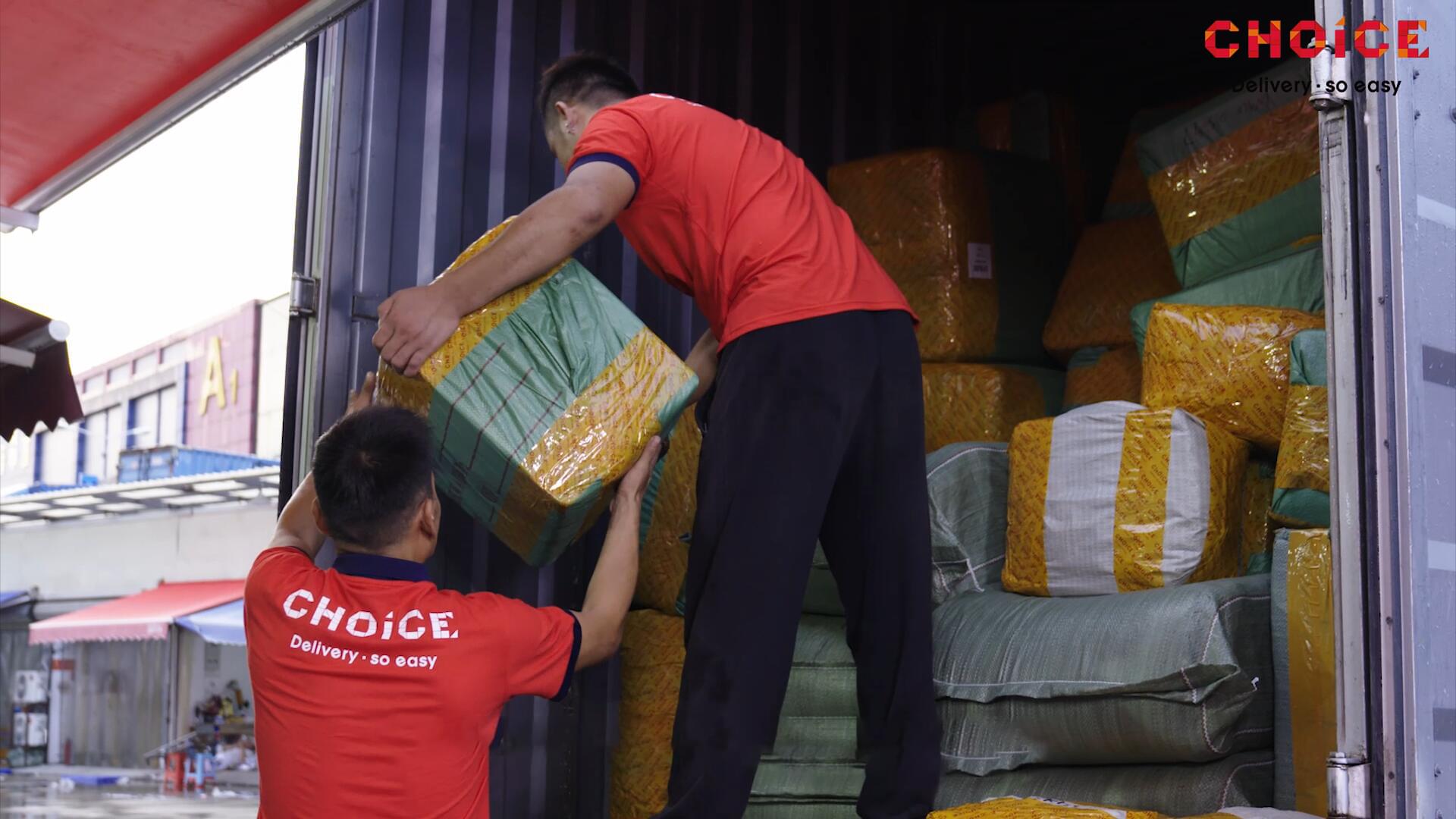
To get a serious answer, provide the information a serious forwarder needs: product name and material, piece count, gross weight and dimensions, packaging type (wooden crates or not), trade term, destination port and delivery address, cargo-ready date, whether the goods contain batteries/liquids/powders or other sensitive items, and any special documents the buyer requires.
One more benefit: this also tests the forwarder. A professional will ask you follow-up questions based on these details; one that only pastes back a rate card can be eliminated.
How CHOICE Answers These Questions

Founded in 1997, CHOICE International Freight has focused on Africa and Middle East lanes ever since, with NVOCC status, consolidation warehouses in Guangzhou, Shenzhen, and Yiwu, and FCL, LCL, air, and warehousing services covering 50+ destination countries.
We accept the full six-step verification: credentials checkable through public channels; destination footprints you can name; references we can provide; trial LCL shipments welcome; and every quote itemized by default, with destination charges listed upfront. Current transit times and rates are given only after an inquiry-based assessment against live schedules — because both move with the market, and any numbers written into an article are the irresponsible kind.
If you are preparing your first shipment to Africa or the Middle East, send us the eight details from Section 6 — and start with a serious assessment.
CHOICE,Delivery So Easy
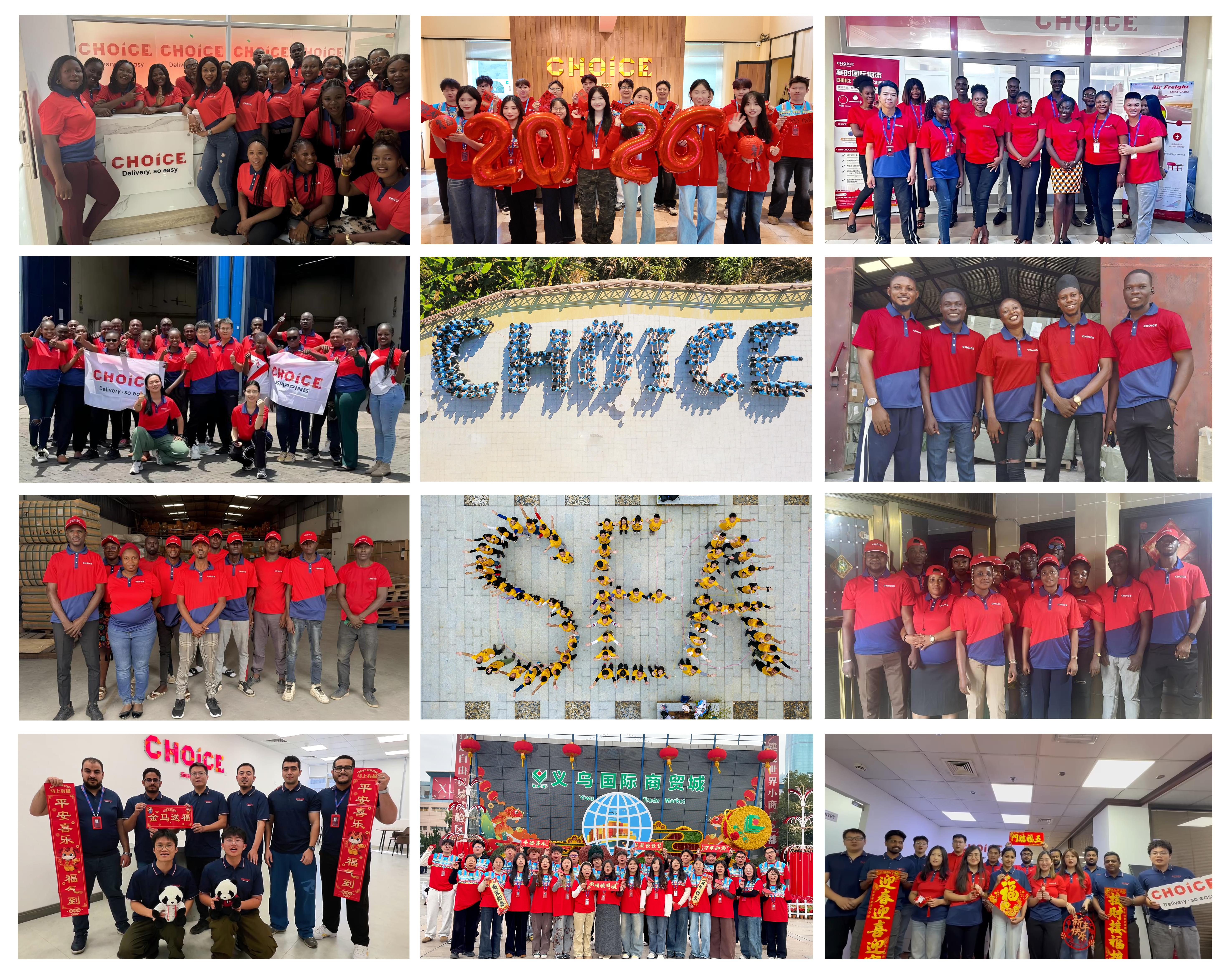
CHOICE Supply Chain Technology Co, Ltd . was establishedin 1997 and has 29 years of experience in Africa&Middle-east logistics. We have already established more than 10 wholly-owned branches in Africa&Midle East, namely Kenya, Rwanda, DRC, Cameroon, Nigeria, Ghana, Côte d'Ivoire, Saudi Arabia, UAE. CHOICE can provide Groupage Service,Full Container Service,Overseas Warehouse Service for our customers. If you have freight transportation needs, welcome to contact us. Tel: 400-613-8847.

Choice Groupage service
Daily/Weekly schedule
Cargo security guarantees
Professional warehousing in China and Africa
With powerful specialized custom clearance team
With 29 years’ experience in sea freight consolidation service
Contact us:400-613-8847
CHOICE International Freight, focusing on cross-border logistics in Africa & the Middle East. Founded in 1997, with 29 years of logistics experience, it provides one-stop cross-border logistics services such as air transportation, sea transportation, and overseas warehousing.
Tel: 400-613-8844