The story of e-commerce in Africa is about to take on a new chapter.

Jumia Secures Financing:
A Strategic Investment That Combines "Survival" and "Boost" Elements
In August 2026, the New York Stock Exchange witnessed a piece of news concerning the fate of African e-commerce.
Known as "African Amazon", Jumia successfully raised 50 million US dollars by issuing 9.1 million American Depositary Receipts (ADSs). This financing was led by the International Finance Corporation (IFC) of the World Bank with a 25 million US dollar investment, and major shareholder Axian and some new investors participated in the investment. The pricing was 5.52 US dollars per ADS, and the transaction is expected to be completed in the second half of August 2026.
The arrival of this fund came at an opportune time. As of June 30, 2026, Jumia's shareholders' equity had plummeted to just $367,000, and the company's book cash had dropped from $77.8 million at the beginning of the year to $48.3 million.
Therefore, for Jumia, these $50 million are not only funds to extend the cash runway but also growth capital to accelerate the optimization of the business structure.
It is worth noting that the management of Jumia actively controlled the scale of financing. CEO Francis Dufay stated that the actual market demand was greater, but the company deliberately remained restrained to avoid repeating the past pattern of "raising funds quickly and spending them even faster".

The development history of Jumia:
From "African Amazon" to a 15-year roller coaster of survival after losing a limb
To fully understand the significance of this financing, one must take into account Jumia's 15-year history.
Phase 1: Rapid Expansion (2012 - 2022)
Jumia was founded in 2012 and made a high-profile listing on the NYSE in 2019, with its market value once reaching several billion dollars. It was highly anticipated as the "Amazon of Africa". However, the low purchasing power in the African market, the high cost of last-mile delivery, the imperfect address system, and the reliance on cash payment all led to its heavy reliance on heavy assets, causing the e-commerce model to be trapped in a long-term money-losing situation.

Phase 2: Survival after Losing an Arm (2022 - 2025)
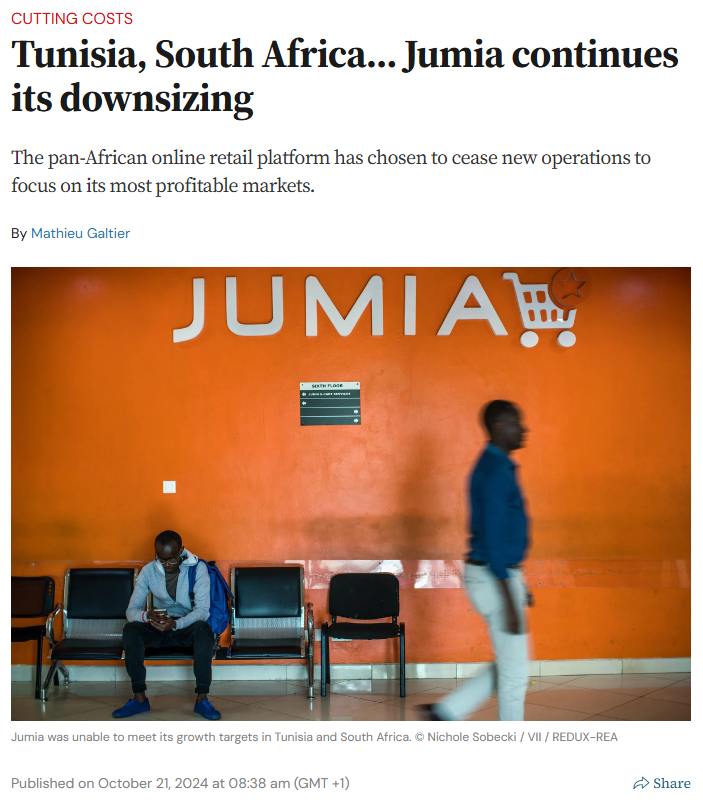
After the new management team took office at the end of 2022, Jumia initiated a "downsizing" reform: it withdrew from markets such as South Africa, Tunisia, and Algeria, and cut off non-core businesses such as food delivery and daily groceries. The total number of employees was significantly reduced from 4,318 to 1,770, a decrease of nearly 60%. This series of contraction measures enabled the company to focus on 8 core markets including Nigeria, Egypt, Kenya, Ghana, and Côte d'Ivoire. The annual loss for the entire year of 2025 narrowed from $97.6 million in 2024 to $60.1 million.
Phase 3: Sprinting towards profitability (2026 onwards)
After strategic downsizing, Jumia clearly set out its profit timeline for 2026: CEO Francis Dufay announced that the company would achieve a break-even in adjusted EBITDA and positive cash flow in the fourth quarter of 2026, and reach full-year profitability in 2027. This $50 million financing round is precisely to provide the final safety cushion for this goal, ensuring the company has sufficient buffer time before achieving self-sufficiency.

Jumia's latest financial report:
The second-quarter results approaching the turning point
Along with the financing announcement, Jumia released its financial report for the second quarter of 2026. The data exhibited the typical characteristics of "approaching a turning point":
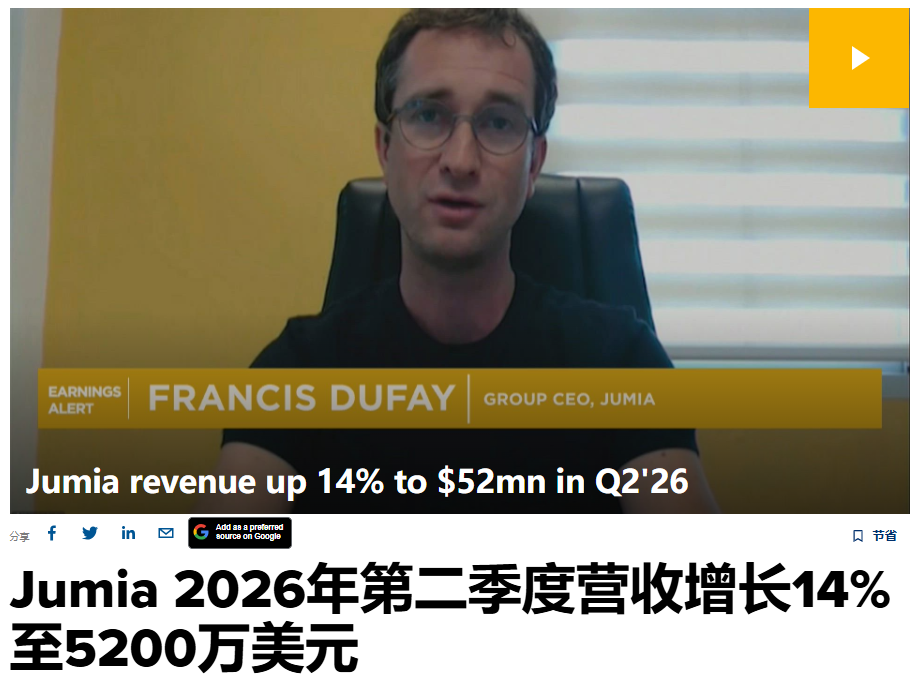
GMV: $216.3 million, up 23% year-on-year; meanwhile, the orders for physical goods on the platform increased by 28%, and the number of quarterly active customers rose by 23%.
Revenue: $52 million, up 14% year-on-year;
Gross profit: up 28% to $30.7 million; the proportion of gross profit in GMV increased to 14.2%;
Adjusted EBITDA loss: narrowed to $8.7 million, a significant improvement of 36% year-on-year;
Pre-tax loss: $10.9 million, improved by 33% year-on-year;
Total number of employees: down 11% quarter-on-quarter to 1,770.
What is particularly noteworthy is that the number of goods sold by international sellers has soared from 2.9 million to 5.8 million - and Chinese sellers are the main contributors to this growth.
Jumia is standing at a watershed moment in the history of African e-commerce. This round of financing has given it valuable time, but the real test lies in whether it can fulfill its profit commitment in the fourth quarter of 2026. Regardless of whether it makes a profit or not, the story of African e-commerce will turn a new page.
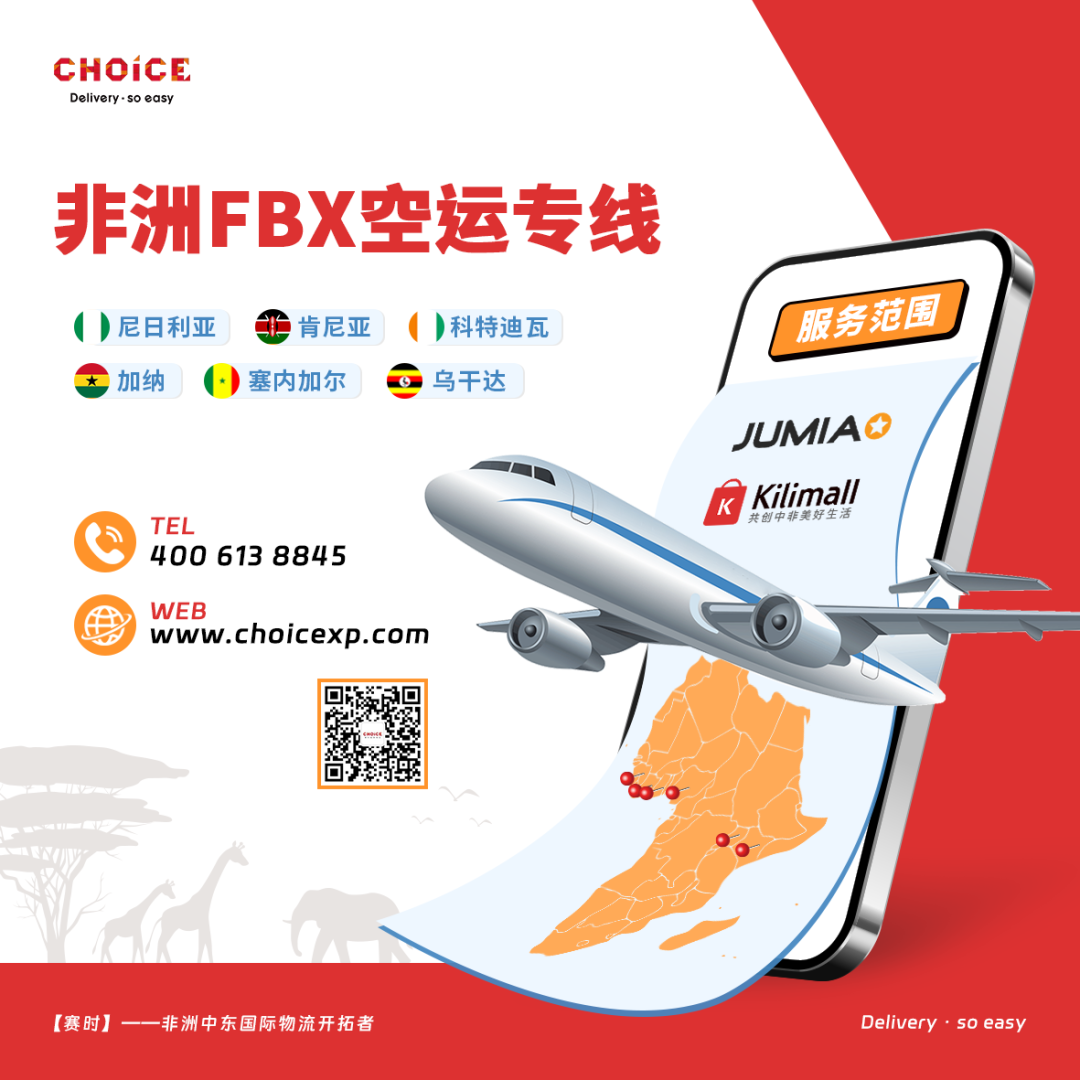
If you have air freight requirements for the UAE, Saudi Arabia or Africa, please add the customer service WeChat (choice199725).

【Disclaimer】
The resources in this article are sourced from the Internet. If there are any corrections or if there is any infringement, please leave a message in the WeChat official account's backend. We will handle it effectively after verification.

CHOICE International Freight, focusing on cross-border logistics in Africa & the Middle East. Founded in 1997, with 29 years of logistics experience, it provides one-stop cross-border logistics services such as air transportation, sea transportation, and overseas warehousing.
Tel: 400-613-8844