If someone asks: Which city best shatters stereotypes about Africa?
My answer would be: The engine of East Africa, Kenya's capital – Nairobi.
Because it possesses the defining characteristics of a major metropolis, and utterly unique.
1
A Globally Recognized Top 100 City
Nairobi, with its diverse economy and innovative dynamism, has successfully secured a spot on the prestigious 2025 Top 100 Most Valuable Global Cities list.
The 2025 list was released by the authoritative international institution GYBrand. Since 2020, GYBrand has annually compiled the Global City Comprehensive Strength Ranking, evaluating urban competitiveness across seven key dimensions: Economic Strength, Infrastructure, Quality of Life, Business Environment, International Reputation, Development Potential, and Global Brand Building. It is widely regarded in the industry as a barometer for measuring a city's soft power.
Nairobi covers an area of approximately 684 square kilometers, with a permanent population exceeding 4.7 million, making it Kenya's capital and largest city.
Nairobi contributes 60% of Kenya's GDP and is one of Africa's six wealthiest cities (2022 data).
It boasts highly developed infrastructure.
The 27.1 km Nairobi Expressway connects the city center with Jomo Kenyatta International Airport, handling over 200,000 vehicles daily.
The Eastern Bypass expansion project traverses the entire city.
Like other global metropolises, glass-clad skyscrapers rise in its CBD, bustling commercial streets pulse with traffic, and stylish shopping malls abound...
What makes it unique is that Nairobi is the world's only metropolis coexisting with wild lions. The Nairobi National Park lies just 7 km from the city center.
This wonder of "Urban Wilderness Coexistence" is Nairobi's most distinctive hallmark.
2
Internationalization
Nairobi is often dubbed "The Paris of East Africa".
It is a hub for African headquarters of multinational corporations. Over 100 corporate giants like General Electric, Google, Microsoft, and Coca-Cola have their African headquarters rooted here. The presence of two UN agencies – UNEP (Environment Programme) and UN-Habitat – further solidifies its position as a global governance hub for Africa.
It is one of only four global headquarters cities for the United Nations worldwide.
Nairobi is also Africa's "Silicon Savannah".
It is home to the Nairobi Securities Exchange (NSE), one of Africa's largest stock exchanges.
The mobile payment system M-PESA is ubiquitous; even a roadside roasted corn vendor accepts payments via phone.
Nairobi is an international trade hub.
Jomo Kenyatta International Airport (JKIA), East Africa's busiest aviation hub, is located here, with flights connecting to over 50 global cities.
The Nairobi Inland Container Depot works in tandem with the Port of Mombasa, radiating trade across East Africa.
Through the Economic Partnership Agreement (EPA) with the EU, Kenya enjoys a zero-tariff trade corridor, with 80% of Kenya's exports to Europe passing through this route.
Nairobi is an international melting pot.
International migrants make up over 15% of Nairobi's population.Somalis form the largest immigrant community, concentrated in Eastleigh.
3
Cutting-Edge
Nairobi bursts with new technology and avant-garde spirit.
Konza Techno City is being planned as Africa's first smart city.
The government aims for 100% clean energy by 2030.
Ushahidi, a digital platform born here and used globally by the UN for crisis response.
iHub, a pioneering model cracking the innovation dilemma in developing countries...
Nairobi is proving that Africa's modernization doesn't need to replicate Western templates.
Diversity and rebellion flow through Nairobi's cultural DNA.
The most iconic cultural symbol is undoubtedly the "Matatu" buses. These wildly decorated and customized minibuses are not just transport; they are rolling artistic manifestos.
In the organic markets of Karen district, discarded magazines are woven into fashionable necklaces, and chimney sheet metal is forged into hunting sculptures.
Nairobi is a city that never sleeps, boasting an astonishing number of bars and nightclubs, alongside the famous Nyama Choma (barbecued meat) culture.
Nairobi is home to one of Africa's largest slums.
The two largest slums are Kibera and Mathare. Kibera covers approximately 2.5 square kilometers and houses an estimated population of 250,000, making it Africa's largest and the world's third-largest slum settlement.
Nairobi is East Africa's hub for small commodity trade.
Traders from Uganda, Tanzania, and beyond flock to markets like Gikomba, Eastleigh, and Toi Main to source goods, transporting them via cross-border buses for sale throughout the region.
Nairobi is a metropolis teeming with contradictions and vitality, offering a true glimpse of Africa.
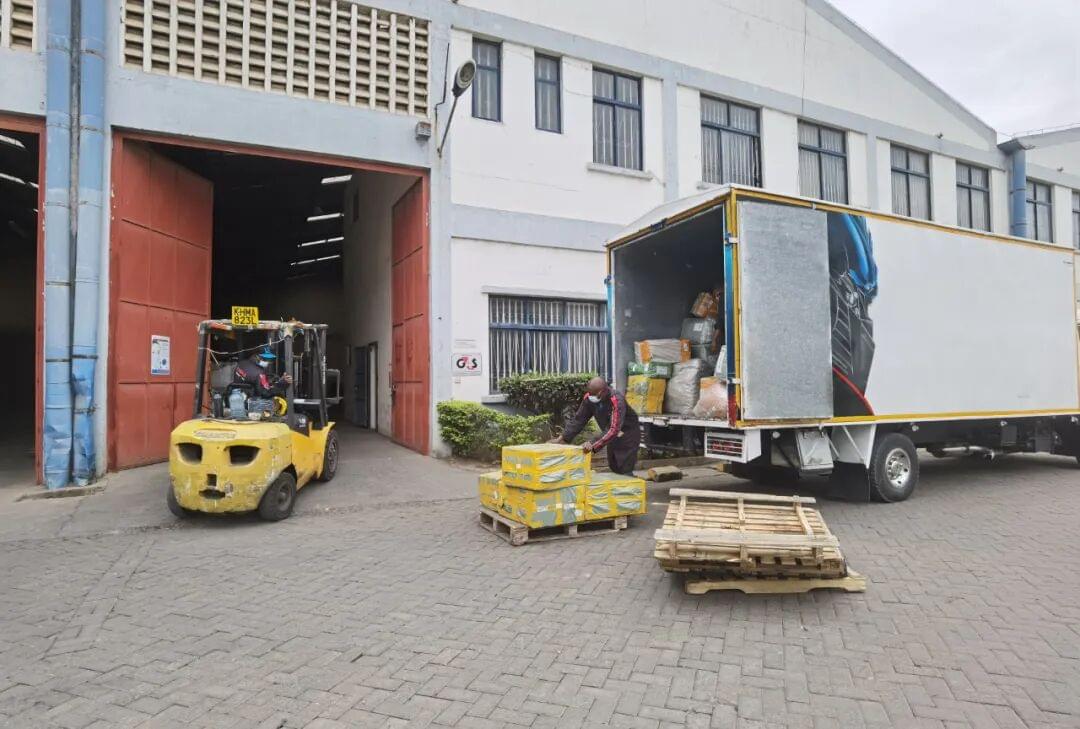
The Kenya branch of CHOICE is headquartered in Nairobi.
We provide warehouse-to-warehouse dedicated shipping lines for Chinese export businesses trading with Kenya. With premium services and cost-effective pricing, we have established a strong market presence, offering robust support for our clients' China-Africa trade activities.


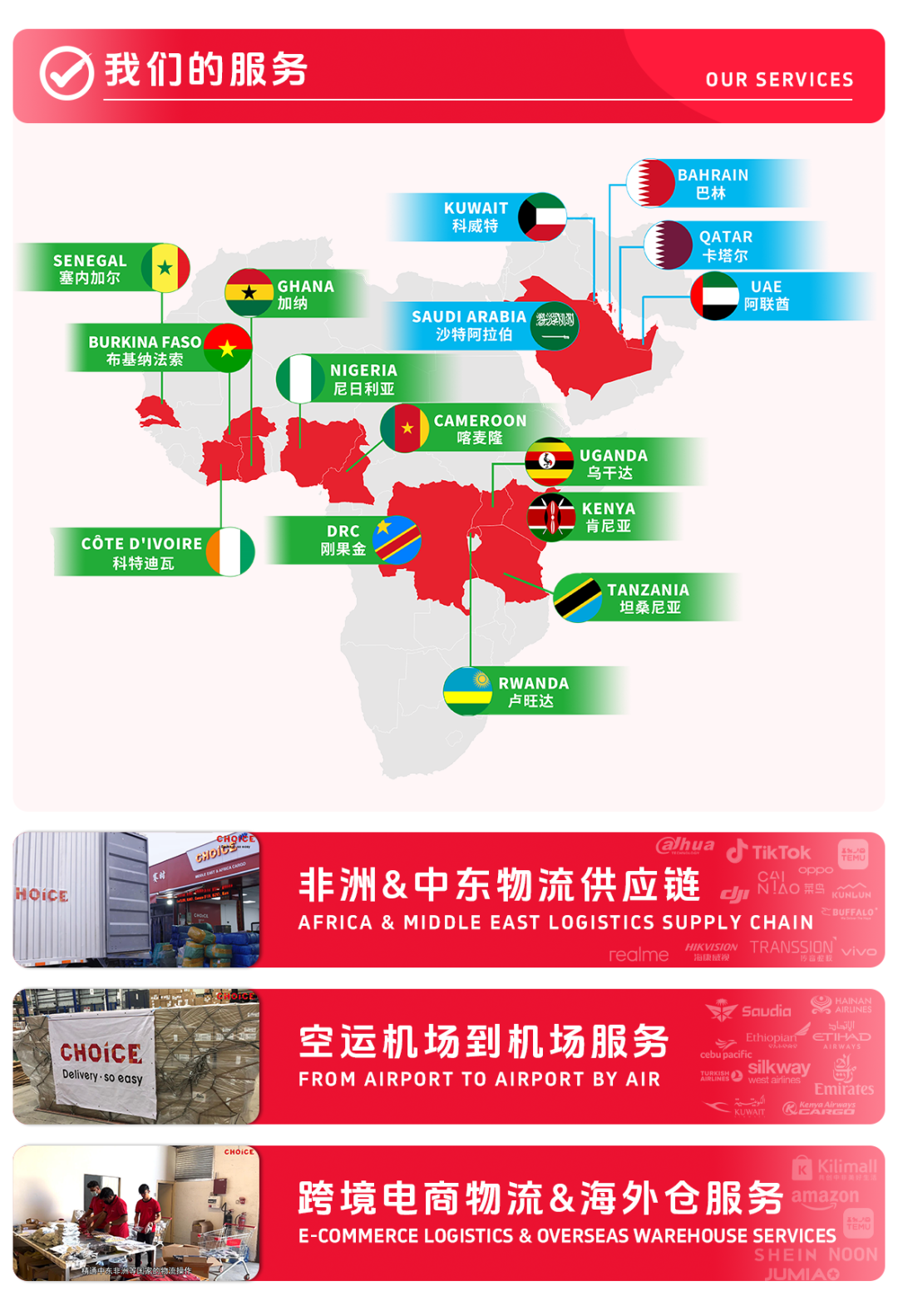


CHOICE International Freight, focusing on cross-border logistics in Africa & the Middle East. Founded in 1997, with 29 years of logistics experience, it provides one-stop cross-border logistics services such as air transportation, sea transportation, and overseas warehousing.
Tel: 400-613-8844