It is well known that Africa is one of the world’s regions experiencing an economic leap.
Within this, the contribution of this particular city is significant.
It is Dar es Salaam, the former capital of Tanzania, located on the East African coast.
1
Population Explosion: Among the Fastest-Growing Megacities
2002: 2.5 million
2012: 4.4 million
2022: 5.3 million
2025: 8.6 million (UN projection)
The development of Dar es Salaam is first evident in its astonishing population growth.
The United Nations Human Settlements Programme (UN-Habitat), in its World Cities Report 2022, listed Dar es Salaam as one of Africa’s fastest-growing megacities. It has consistently maintained an annual growth rate exceeding 5%, far above the global average.
This growth is primarily driven by rural-to-urban migration and natural increase. Urban employment opportunities, improved infrastructure, and rising living standards are the core factors attracting this influx.
The city’s population is predominantly young (Tanzania’s overall median age is around 18), providing a large labor force but posing significant challenges in education and job matching.
The city’s population composition is diverse, primarily consisting of locals, but also featuring an active international community (Arab, Asian, European/American) involved in business, diplomacy, and professional services. Chinese companies and expatriates have increasing influence in infrastructure and trade sectors.
This growth is primarily driven by rural-to-urban migration and natural increase. Urban employment opportunities, improved infrastructure, and rising living standards are the core factors attracting this influx.
While Christians form the majority in Tanzania overall (63% Christian; 35% Muslim).The main religion in Dar es Salaam is Islam, with a significant portion of the population adhering to the faith. The city’s location on the Indian Ocean, along with its historical connections to Arab traders, has greatly influenced the spread of Islam in the region.
Additionally, a significant number of people practice Christianity. This fusion of diverse religions creates a unique atmosphere, reflected in daily life, festivals, and local customs.
2
Economic Rise: From Coastal Town to Megacity
According to World Bank data, Tanzania’s economic growth rate has remained around 6-7% in recent years.
As Tanzania’s undisputed economic hub, leveraging its port and regional trade advantages, Dar es Salaam contributes over half of Tanzania’s Gross Domestic Product (GDP) and about two-thirds of government revenue.
Trade Hub
The Port of Dar es Salaam is the "lifeline" of the city’s transformation.
As Tanzania’s and East Africa’s primary trade gateway, the port handles the majority of the country’s import and export cargo. This directly drives industrialization and the prosperity of logistics, warehousing, and related service industries.
The Julius Nyerere International Airport (DAR), Tanzania’s busiest airport, connects to major cities across Africa, Europe, the Middle East, and Asia.
Warehousing facilities around the airport are currently being expanded to serve free trade zones and re-export trade.
Key Industries
Tourism is an important source of revenue. The economy is dominated by services (finance, logistics, wholesale & retail). Industry accounts for over half of the nation's industrial output, covering textiles & garments, food processing, cement, pharmaceuticals, and oil refining (the TIPER refinery supplies Tanzania and Zambia).
The import and export trade of agricultural and mineral resources (e.g., cotton, coffee, diamonds, natural gas) also heavily relies on the city’s distribution capabilities.
Core Industrial Zones
Kinondoni, Temeke, and Ubungo Districts: Concentrate light industries like textiles & garments, food processing, building materials (cement, aluminum products), cashew processing, and vehicle repair. Proximity to the port reduces logistics costs.
Kigamboni Peninsula: Home to the TIPER refinery and related energy industries, with an oil pipeline extending directly to Ndola, Zambia.
Emerging Economic Zones:
Bagamoyo Special Economic Zone: Located about 45 minutes from Dar es Salaam. Plans focus on textiles, machinery manufacturing, and deep processing of agricultural products, aiming to attract foreign investment for export-oriented manufacturing.
Services & Core Business District:
Ilala District: The core commercial area, hosting banks, financial institutions, high-end hotels, and regional headquarters of multinational corporations.
3
Growing Pains: Challenges of Rapid Development
Expansion of Large-Scale Informal Settlements (Slums): UN-Habitat estimates that over 70% of Dar es Salaam's population lives in informal settlements, facing challenges like inadequate basic services, unclear land tenure, and environmental health risks.
Infrastructure Strain: Although the road system has seen improvements, the population surge has exacerbated congestion issues. The existing road network struggles to meet the mobility demands of a metropolis exceeding 10 million people. Power supply stability needs enhancement and remains insufficient for the needs of a megacity of this scale.
A Hindu Marvel in Africa: Dar es Salaam boasts a denser concentration of Hindu temples (dedicated to various deities like Lord Ganesha, Shiva, etc.) than many places in India itself, with daily worship thriving.
The Indian-origin community not only dominates traditional spice and textile trade but has also shaped the city's culinary scene (e.g., Biryani, coconut milk rice cakes "Vitumbua") and festive atmosphere.
A Modern Link of Legacy: During the Beijing Olympics (2008) torch relay, Dar es Salaam was the only city traversed on the African continent.
The torch started its journey from the origin station of the Tazara Railway (a symbol of China-Tanzania friendship), passed along Mandela Road, and concluded at the China-Tanzania jointly-built National Stadium (Benjamin Mkapa Stadium), symbolizing the enduring cooperation between China and Africa across time and space.
The rapid development of Dar es Salaam has made it one of the most vibrant cities in East Africa.
With its hub advantage, industrialisation policy and special economic zone construction, the city is expected to become an important economic centre in Africa within the next decade.
CHOICE Tanzania Branch is located in Dar es Salaam, providing customers with door-to-door express services from China to Tanzania and airport-to-airport services.
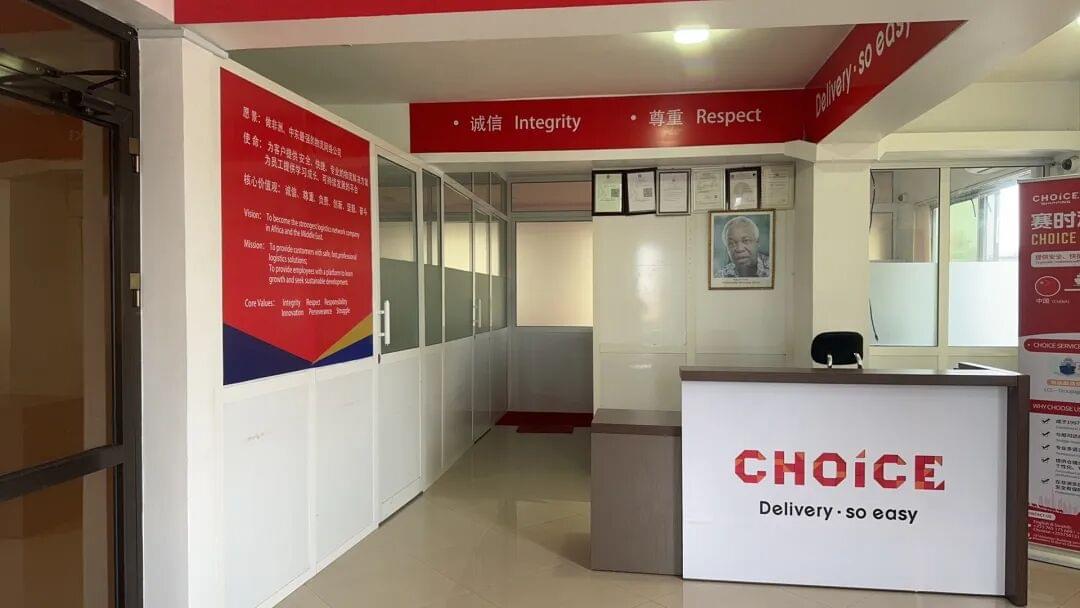
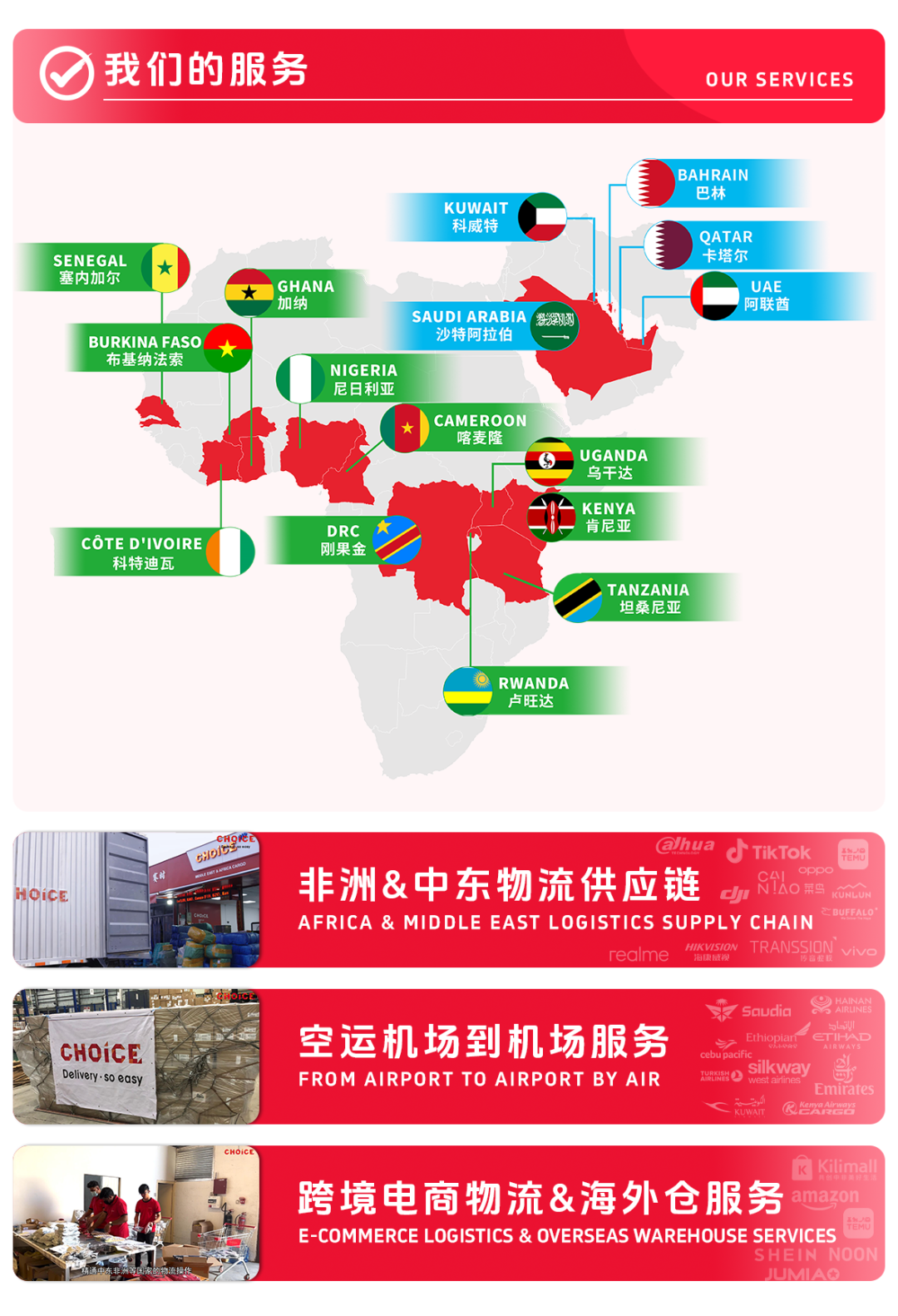
CréCHOICE was founded in 1997, opened wholly-owned branches and warehouses in African countries, built 10+ logistics lines, has formed a safe and efficient end-to-end logistics supply chain solutions in the African market, the strength of China's exports to Africa for you to solve the logistics problems.



ChoiceAir respects and advocates the protection of intellectual property rights. The images or parts of the content quoted in this article are for reference and information dissemination purposes only, if there are any errata or suspected infringements, please inform us in the comments and we will deal with them effectively after verification.
https://www.163.com/dy/article/JLTBHKRN05569D8L.html
https://www.zgbk.com/ecph/words?ID=584162&SiteID=1
https://www.thepaper.cn/newsDetail_forward_30878760
https://tanzaniaadventures.co.tz/travel/what-is-the-main-religion-in-dar-es-salaam.php
https://www.ebsco.com/research-starters/history/dar-es-salaam-tanzania
https://www.cityscopeafrica.com/dar-es-salaam-the-economic-centre-of-tanzania/
https://www.globalconstructionreview.com/rebuilding-tanza2nias-dar-es-sal3aam-kicks-2bn-roa/
https://www.thecitizen.co.tz/tanzania/supplement/milestone-reform-set-to-unlock-manufacturing-growth-streamline-exports-and-elevate-trade-visibility-across-the-nation-5021424
CHOICE International Freight, focusing on cross-border logistics in Africa & the Middle East. Founded in 1997, with 29 years of logistics experience, it provides one-stop cross-border logistics services such as air transportation, sea transportation, and overseas warehousing.
Tel: 400-613-8844