On the plateau at 1,190 meters above sea level on the northern shore of Lake Victoria stands a beautiful "Plantain City".
Straddling the equator, it showcases a deep fusion of nature and tradition with modernity, revealing its splendour as a city built on hills.
With rapid economic development, it is an investment hotspot in the heart of East Africa;
It is the "Pearl of Africa" – Kampala, the capital of Uganda.
1
A Feast of Aesthetics: Nature and Culture Interwoven
Kampala has a tropical rainforest climate. The average annual temperature ranges between 25-30°C, with minimal variation. It experiences two rainy seasons each year (August-December and February-June), offering spring-like weather year-round.
Covering 189 sq km, Kampala undulates with the hills. Lush vegetation nurtured by the climate is embedded within the urban fabric.
Verdant plantain trees, palm groves, and mango trees weave together its reputation as the "Plantain City".
The name "Kampala" itself originates from nature.
In the local language, "Kampala" means "Impala Hill" (Akasozi k'empala).
Originally a wilderness, the hills were covered in rich pasture where many animals thrived naturally, with impalas being the most numerous. These impalas were frequently seen running in herds from hill to hill, hence the name "Impala Hill" or "Land of the Impalas".
Complementing nature are its historical and modern structures.
Kampala is divided into five parts: Kawempe, Nakawa, Makindye, Rubaga, and the City Centre.
On Nakasero Hill, modern architectural complexes like the Parliament Building and the International Conference Centre stand majestically.
Traditional structures such as the National Museum, Gaddafi Mosque, cathedrals, and the Kabaka's Palace (King's Palace) crown various hilltops.
Restaurants, nightclubs, bars, cinemas, and other modern facilities abound...
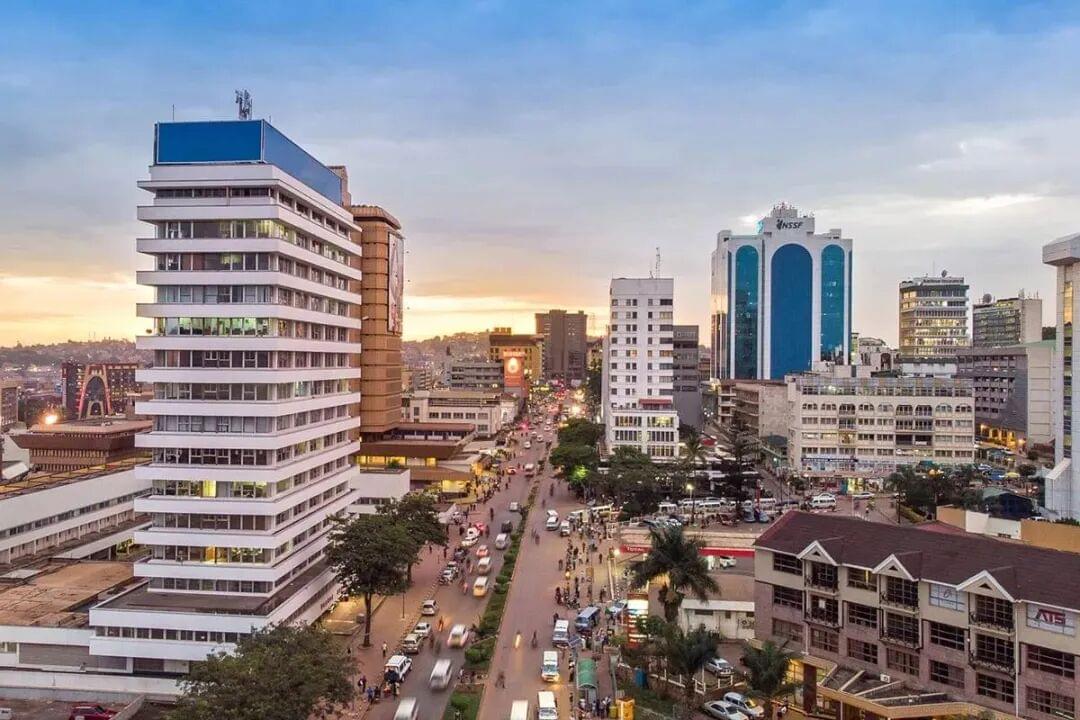
Kampala Road. Photo © Jjumba Martin
Kampala's unique ecology and culture attract global travelers, making the service sector the primary contributor to the city's GDP.
2
Prosperous Beauty in Economic Vitality
Kampala's beauty is further rooted in its robust economic development.
Leveraging a relatively stable political environment and market-oriented reforms, Uganda's economy has maintained steady growth in recent years (with GDP growth often hovering around 5%, a standout performance in Africa). Kampala is the absolute core driving force.
Industrial Landscape
Major industries include agricultural exports (coffee, cotton, sugarcane) and services (finance, commerce, tourism).
Additionally, its industrial output ranks second nationally, primarily comprising agro-processing, textiles, cement, sugar refining, mechanical repair, daily chemicals, tobacco, textiles, timber, plastics, and leather goods (concentrated in Kawempe, Nakawa, and the Industrial Area). The headquarters of most major national companies are located here.
For instance, the China-Uganda Mbale Industrial Park, about 200 km from Kampala, focuses on manufacturing home appliances (LED lights, TVs), daily chemicals, building materials, and auto parts. It creates over 5,000 jobs annually, supplies the East African market, and reduces import dependency.
However, consumer goods and industrial equipment still rely heavily on imports.
Transportation Hub
Kampala hosts Uganda's main international air gateway – Entebbe International Airport (EBB). Its annual passenger throughput has grown to around 3 million, with cargo capacity exceeding 100,000 tons. It's a key trade and logistics hub connecting East Africa southwards to the globe.
Although landlocked, Kampala connects efficiently via road (and future rail) to the Kenyan port of Mombasa (the main channel) and the Tanzanian port of Dar es Salaam.
Consumption Potential
Kampala has a population of 1.68 million, with a daytime population reaching 4.5 million. It's one of Africa's fastest-growing cities, with an annual growth rate of 5.6% (KCCA, 2019).
Its demographic structure is a key growth dividend: 45% of residents are under 35 years old, immigrants and transient populations make up about 20%, and the youth demographic is driving a surge in demand for non-essential consumer goods.
Consumption levels are distinctly stratified: a large low-income base relies on traditional markets (like Kikuubo and Kariakoo for low-priced daily necessities);
An expanding middle class is fueling demand for modern retail (e.g., Acacia Mall, Garden City Mall), home appliances, and branded goods;
High-net-worth individuals and the substantial diplomatic, international organization, and NGO communities support the high-end consumer market.
3
Challenges Hidden Behind the Beauty
Expansion of Large-Scale Informal Settlements (Slums): UN-Habitat estimates that over 70% of Dar es Salaam's population lives in informal settlements, facing challenges like inadequate basic services, unclear land tenure, and environmental health risks.
Infrastructure Strain: Although the road system has seen improvements, the population surge has exacerbated congestion issues. The existing road network struggles to meet the mobility demands of a metropolis exceeding 10 million people. Power supply stability needs enhancement and remains insufficient for the needs of a megacity of this scale.
Kampala Runs on Nightlife
Kampala is dubbed the "Party Capital of East Africa" because nightlife is an integral part of the city's culture; many Kampalans go out nightly. Live bands, Afrobeat, reggae, and traditional Ugandan music blend seamlessly in the city's bars and clubs.
Bananas: Beyond the Plate, Towards Eco-Bags
Kampalans' reliance on bananas is extraordinary. In the local language, "food" (omulimu) is almost synonymous with "banana" (matoke).
Beyond being used in various dishes and brewed into alcohol, banana fibers are even woven into eco-bags. The local women's cooperative "Green Banana" produces 100,000 fiber bags annually, replacing plastic.
Downtown's "Banana Market" (Owino Market) boasts over 200 stalls specializing solely in bananas. With varieties ranging from finger-sized sweet bananas to arm-thick plantains – totaling up to 37 types – it's aptly called a "Banana Museum".
Kampala's dual ‘beauty’ — natural endowments and cultural heritage lay the foundation for the city's appeal, while demographic dividends and policy support drive economic momentum.
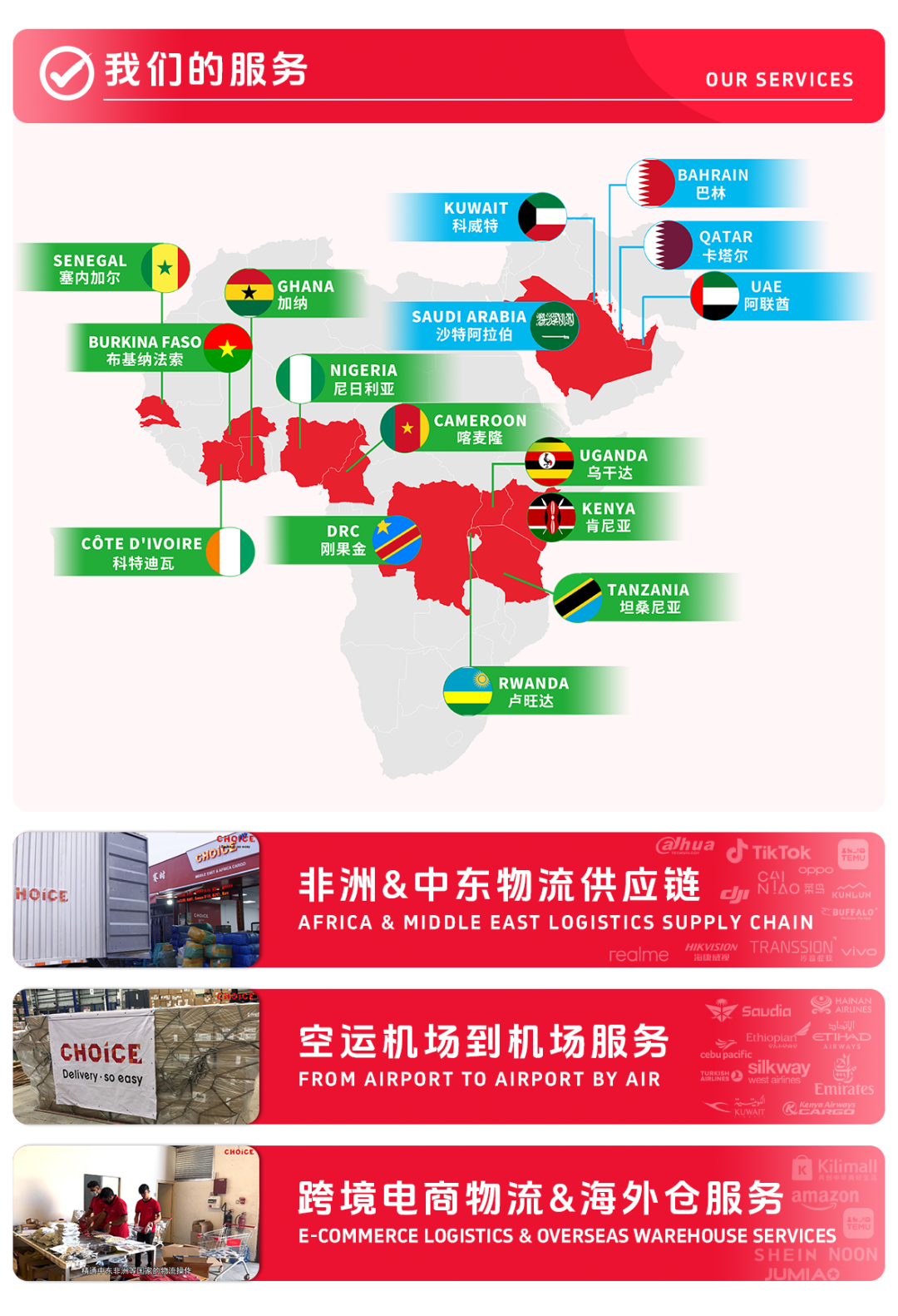
CHOICE Uganda Branch is located in Kampala, providing customers with door-to-door express services from China to Uganda and airport-to-airport services.
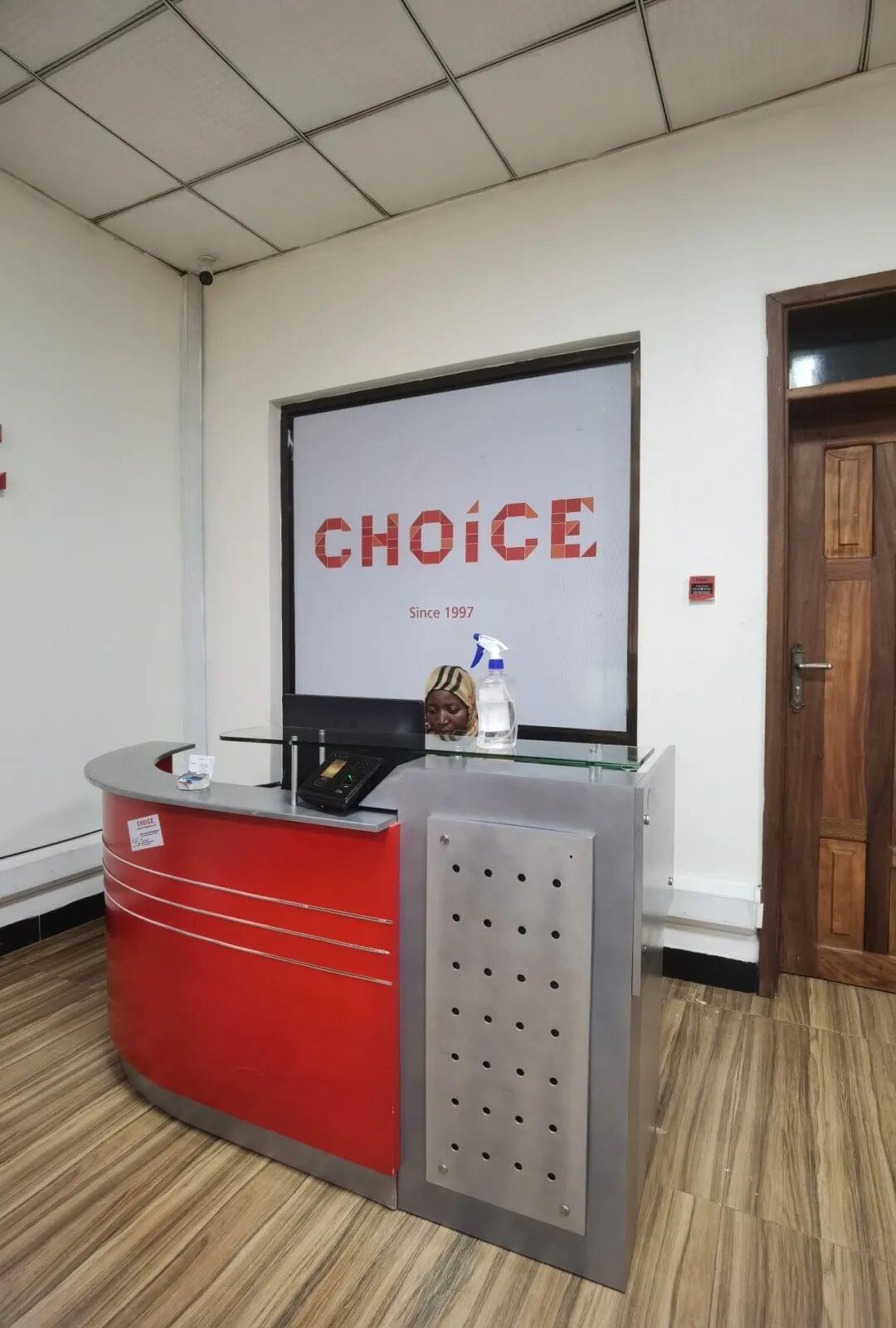
CréCHOICE was founded in 1997, opened wholly-owned branches and warehouses in African countries, built 10+ logistics lines, has formed a safe and efficient end-to-end logistics supply chain solutions in the African market, the strength of China's exports to Africa for you to solve the logistics problems.




ChoiceAir respects and advocates the protection of intellectual property rights. The images or parts of the content quoted in this article are for reference and information dissemination purposes only, if there are any errata or suspected infringements, please inform us in the comments and we will deal with them effectively after verification.
https://qifu.zcqtz.com/article/418545.html
https://en.wikipedia.org/wiki/Kampala#Economy
https://destinationuganda.com/travel/places/kampala-city/
https://www.worldcitiesday.cn/zh/zscp/shj/alzs/wgd/20241028/205.html
https://www.toutiao.com/article/7370377552940040723/?upstream_biz=doubao&source=m_redirect
https://nilepost.co.ug/news/212213/a-journey-through-kampala-the-nightlife-capital-of-east-africa
CHOICE International Freight, focusing on cross-border logistics in Africa & the Middle East. Founded in 1997, with 29 years of logistics experience, it provides one-stop cross-border logistics services such as air transportation, sea transportation, and overseas warehousing.
Tel: 400-613-8844