From gold veins discovered on historical reefs to becoming Africa's current economic engine, this "City of Gold" continues to write its blazing story in different ways.
It is the economic heart of South Africa – Johannesburg.
1
A Metropolis Born of Gold, Thriving from 'Gold Rushes'
Johannesburg is a metropolis built on gold mining, called "Egoli" (meaning "City of Gold") by the Zulu people.
In 1886, prospector George Harrison accidentally discovered gold on a farm in the Witwatersrand region.
A gold-bearing reef powerful enough to alter the global gold landscape was thus revealed, and prospectors flooded in.
On October 3rd of the same year, this camp was officially named 'Johannesburg'.
From then on, supporting industries formed around mining expanded rapidly: railways connected the city to coastal ports, electricity and water systems were successively activated...
The boom in gold mining gave birth to the city's prototype.
Through a century of changes, Johannesburg's footprint continuously expanded.
Today, it spans 1,645 square kilometers and is home to 6.09 million people (2024 data), accounting for 38% of Gauteng Province's population and 10% of South Africa's total population, firmly placing it among Africa's most developed cities and the world's top 100 largest cities.
2
The Multicultural DNA Forged by the Gold Rush
Migration driven by the gold rush shaped Johannesburg's multicultural DNA.
The most common racial groups in Johannesburg are Black African (76.4%), Coloured (5.6%), White (12.3%) and Indian/Asian (4.9%).
About one-third of the population speaks a Nguni language, 25% speaks the Sotho language, 18% speaks English, 7% speak Afrikaans, and 6% speak Tshivenda.
Around 53% of the residents of Johannesburg belong to a mainstream Christian church while 24% are not affiliated with any religion.
14% are members of African Independent Churches, 3% are Muslim, 1% are Jewish, and 1% are Hindu.
There is also a sizable Mormon population in Johannesburg of around 49,000, and it is the site of the first LDS Temple in Africa.
3
Economic Map: A Dual-Layered 'Land of Opportunity'
Gold defined Johannesburg's origin, but the city did not remain trapped in the cycle of resource dependency.
Following the decline in gold ore grades and rising extraction costs post-1970s, Johannesburg proactively initiated a transformation, achieving a leap from "physical gold digging" to "industrial opportunity digging."
Financial Hub
Initially serving to finance gold mines, the Johannesburg Stock Exchange (JSE), founded in 1887, has grown into one of the world's fastest-growing financial centers, ranking 33rd in the Global Financial Centres Index. Furthermore, it hosts the highest concentration of banking, insurance, and securities institutions in Africa.
For instance, the African Regional Centre of the BRICS New Development Bank is located here. It is also the area with the highest concentration of overseas Chinese in South Africa.
Manufacturing
Manufacturing sectors that formed around mining, such as mining machinery and metallurgy, are crucial pillars of Johannesburg's economy.
Driven by Africa's green economy dividend, the South African government has made significant investments in developing its automotive manufacturing sector. Numerous international automakers and factories have established operations in Johannesburg, positioning the city as a critical hub in the global new energy vehicle supply chain.
Additionally, industries like food processing and chemicals further diversify Johannesburg's industrial system.
Digital Economy
In the wave of the Fourth Industrial Revolution, Johannesburg began digging for "digital gold."
The South African government actively formulated a national digital strategy, viewing digital transformation as a core driver of economic growth, and launched policies including national broadband network coverage and improving e-government platforms.
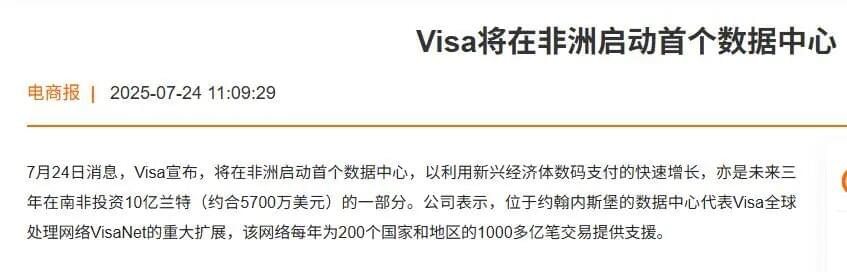
In 2023, South Africa's e-commerce sales reached a record $4.065 billion, a 29% increase from $3.15 billion in 2022 (according to a 2024 WordWideWorx report).
As South Africa's economic center, Johannesburg is not only seeing booming fintech but also holds significant potential in digital infrastructure, cross-border e-commerce, and other areas.
Data shows that Johannesburg is an African city where single data centers can provide over 20MW of power, supported by 98.8% 4G coverage, 38.4% 5G coverage, and multiple transcontinental submarine cables.
The 'Golden Gateway' Connecting Africa and the World
Although a landlocked city, Johannesburg functions as a "golden gateway" for international trade through the synergy of "airport + inland hub + port."
OR Tambo International Airport is its aerial
Leveraging its rail and road networks, Johannesburg is deeply connected to South Africa's two major ports: Durban and Cape Town.
Climate
Johannesburg, though situated in Africa, lies at an elevation of approximately 1,700 metres, resulting in a relatively temperate climate. Winters (roughly May to September) are particularly cool, with night-time temperatures occasionally dropping below freezing.
For this very reason, snowfall is indeed possible in Johannesburg, though it remains a relatively rare weather occurrence. For instance, in July 2023, Johannesburg experienced its first snowfall in eleven years.
Cradle of Humankind
There are other treasures to be found around Johannesburg besides gold.
A total of 40 percent of all fossil finds have been made in this region.
It is known as the Cradle of Humankind and is one of South Africa's World Heritage Sites.
In fact, a new early human species, "Homo naledi", was discovered here about ten years ago.
The World's Largest Man-Made Urban Forest
You will find the largest artificially created urban forest in the world in Johannesburg.
More than 10 million trees have already been planted, and many more are added every year.
Not only does this help against the greenhouse effect, it also reduces the constant noise of the city.
From a gold camp in 1886 to Africa's economic engine today, Johannesburg's 'blaze' has never cooled.
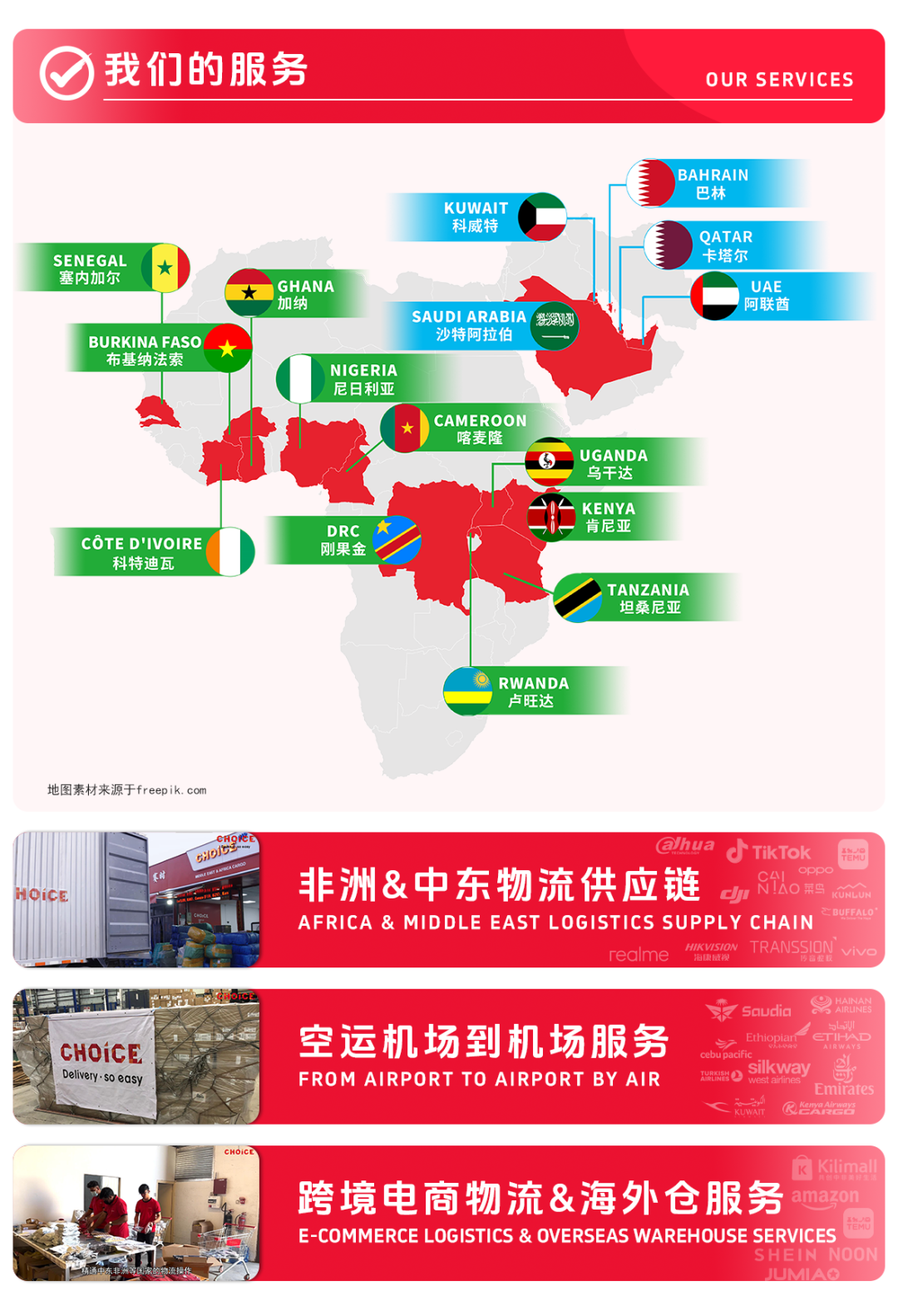
CHOICEAIR offers warehouse-to-warehouse logistics services from China to Johannesburg, with strategically located outlets close to key markets. We are committed to providing safe, fast, and professional freight services for commercial and trading enterprises, ensuring your cargo arrives safely and securely in Africa.
CHOICE was founded in 1997, opened wholly-owned branches and warehouses in African countries, built 10+ logistics lines, has formed a safe and efficient end-to-end logistics supply chain solutions in the African market, the strength of China's exports to Africa for you to solve the logistics problems.



ChoiceAir respects and advocates the protection of intellectual property rights. The images or parts of the content quoted in this article are for reference and information dissemination purposes only, if there are any errata or suspected infringements, please inform us in the comments and we will deal with them effectively after verification.
http://mrdx.cn/content/20180725/Articel02006BB.htm
https://www.toutiao.com/article/7469923510610854438/?upstream_biz=doubao&source=m_redirect
https://www.cctv.com/special/704/6/44696.html
https://en.wikipedia.org/wiki/Johannesburg#Infrastructure
https://www.drivesouthafrica.com/blog/10-interesting-facts-about-johannesburg/
https://citysightseeing.co.za/en/joburg/johannesburg-city-tour
https://www.britannica.com/place/Johannesburg-South-Africa/History
https://worldpopulationreview.com/cities/south-africa/johannesburg
https://www.rsm.global/southafrica/consulting-insights/five-routes-manufacturing-growth-south-africa
CHOICE International Freight, focusing on cross-border logistics in Africa & the Middle East. Founded in 1997, with 29 years of logistics experience, it provides one-stop cross-border logistics services such as air transportation, sea transportation, and overseas warehousing.
Tel: 400-613-8844