
PwC shows that AI could bring $320 billion in revenue to the region by 2030 — yes, "billion" not "million". Of that, Saudi Arabia is set to capture $135.2 billion, equivalent to 12.4% of the country's GDP at that time; the UAE's share will be even higher at nearly 14%.
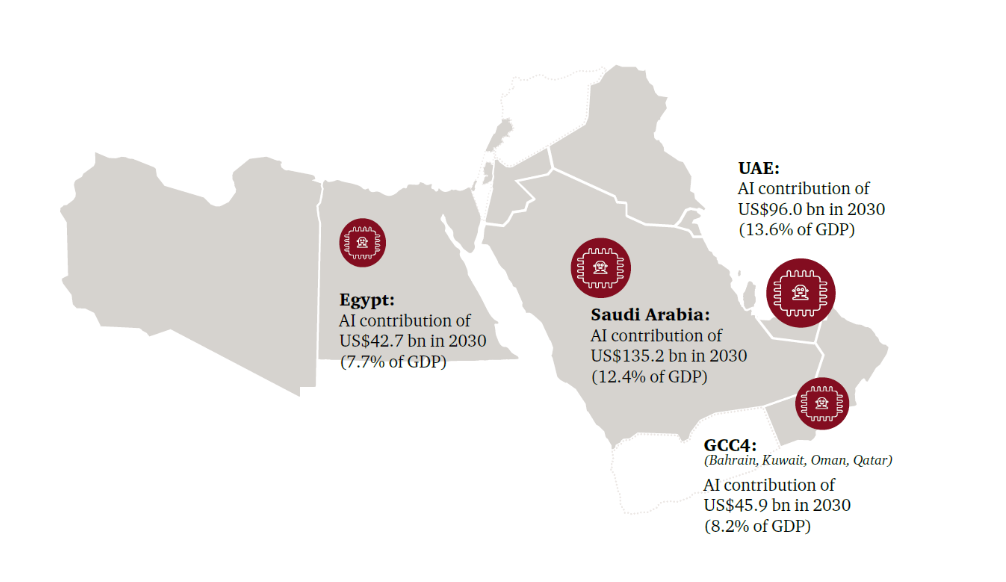
But today, we're not focusing on these big-picture numbers. Instead, we look at something closer to the market: in the Middle East, AI has shifted from being a "selling point" or "nice-to-have" feature to a "basic option" for products.

AI + Products Align with a Value-Conscious Mindset
Many attribute the enthusiasm for AI-powered products in the Middle East to "government push", "love for new tech", or "youth demographic dividend". But beneath these factors lies a simpler, often overlooked reason: in the Middle East, AI is not just a cool tech label — it's a practical, logical choice that saves money and hassle.
According to the Voice of the Consumer 2025 Report, rising inflation, changing lifestyles, and digital technology are making consumers increasingly lean toward convenient, personalized choices that emphasize speed, quality, and flexibility.
Put simply: "I buy what I think is worth the price."
A PwC report also notes that AI applications enhance product appeal through personalization, quality, time savings, and greater variety.
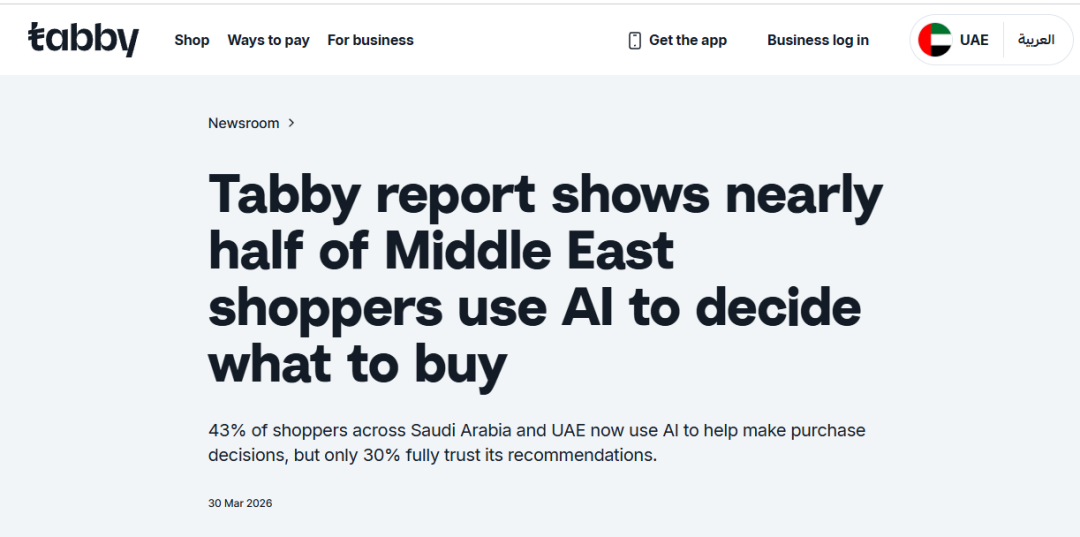
A Tabby survey of over 20,000 consumers in Saudi Arabia and the UAE confirms this: 43% of shoppers already use AI to help with purchasing decisions, and the figure is even higher among young consumers — over half of those aged 18–29 have integrated AI into their shopping habits.
Take air conditioners as an example — summer temperatures in the Middle East often exceed 50°C, so cooling is not seasonal but a year‑round necessity. In the Gulf region, a household's monthly electricity bill in summer can easily reach several hundred dirhams or more. In this context, an AI‑enabled AC that learns usage habits and adjusts operation intelligently delivers not only comfort but also tangible bill savings.
Several brands have already launched AI ECO energy‑saving ACs, with efficiency gains up to 60%. Some models feature smart temperature control that can even detect when a window is opened and pause operation, avoiding unnecessary energy waste. At the end of the day, these features aren't selling a high‑tech concept — they're helping families save real money on electricity.
In other words, AI + products, when placed in everyday scenarios, use technology to deliver both "savings" and "convenience" at once. They don't ask consumers to pay extra for the "smart" label — they make the product itself more worth its price.
The Most Competitive Sectors: Home Appliances + Consumer Electronics
Currently, functional products like home appliances and consumer electronics are the fastest‑growing AI‑adoption sectors in the Middle East. PwC survey data shows that 70% of Saudi consumers prefer electronics with AI features when making a purchase.
From AI‑powered camera enhancements and voice assistants on phones, to TVs that automatically adjust picture quality and recommend content, to fridges that predict food inventory and remind you how long eggs have been sitting there, to washing machines that adjust water temperature automatically, to ACs that learn your schedule and adjust temperature...
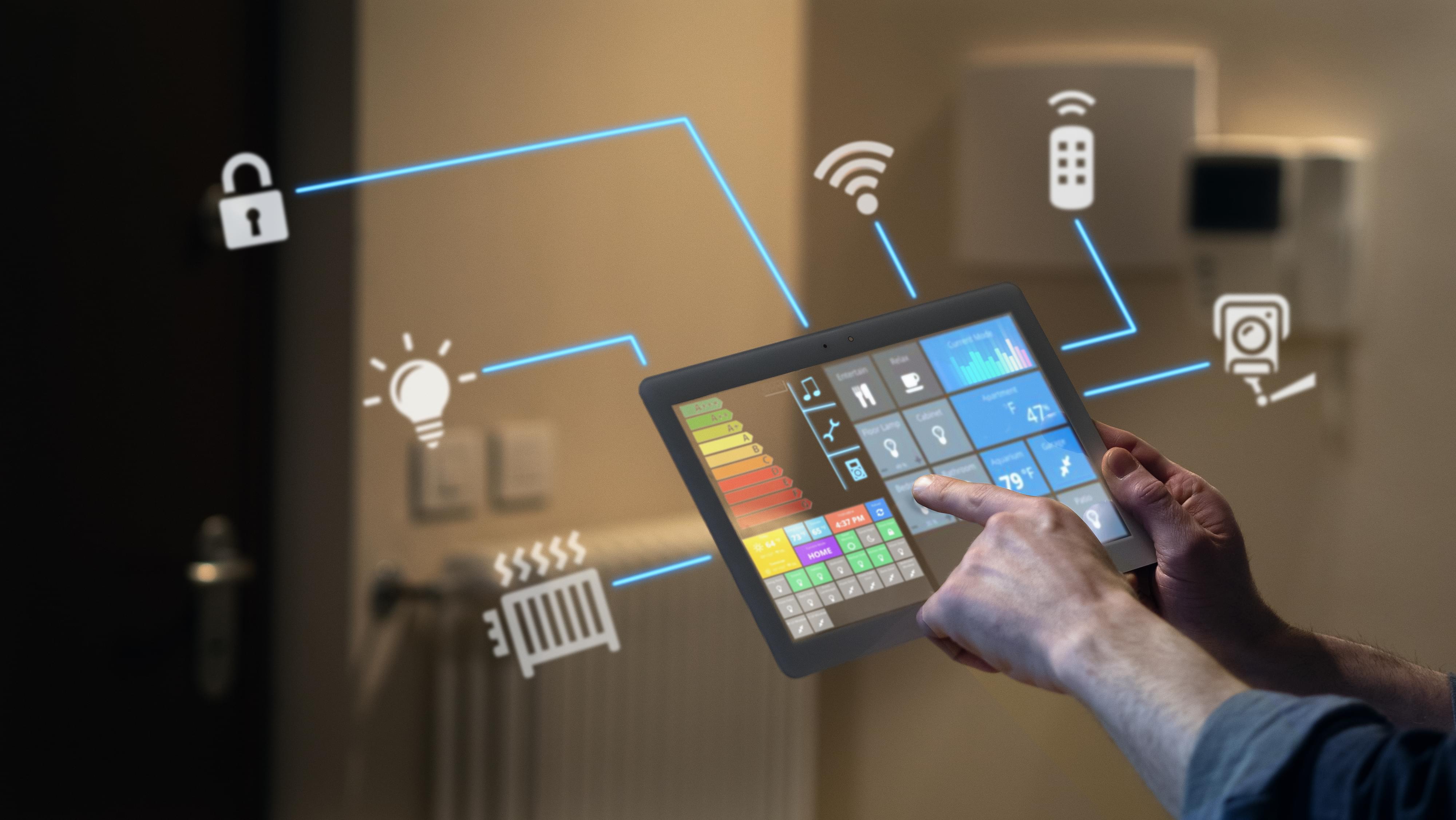
these features are no longer conceptual. They are products already on shelves. Take washing machines: once simple and functional, they now come with AI fabric recognition technology that automatically distinguishes between cotton, linen, silk, etc., making laundry truly more carefree.
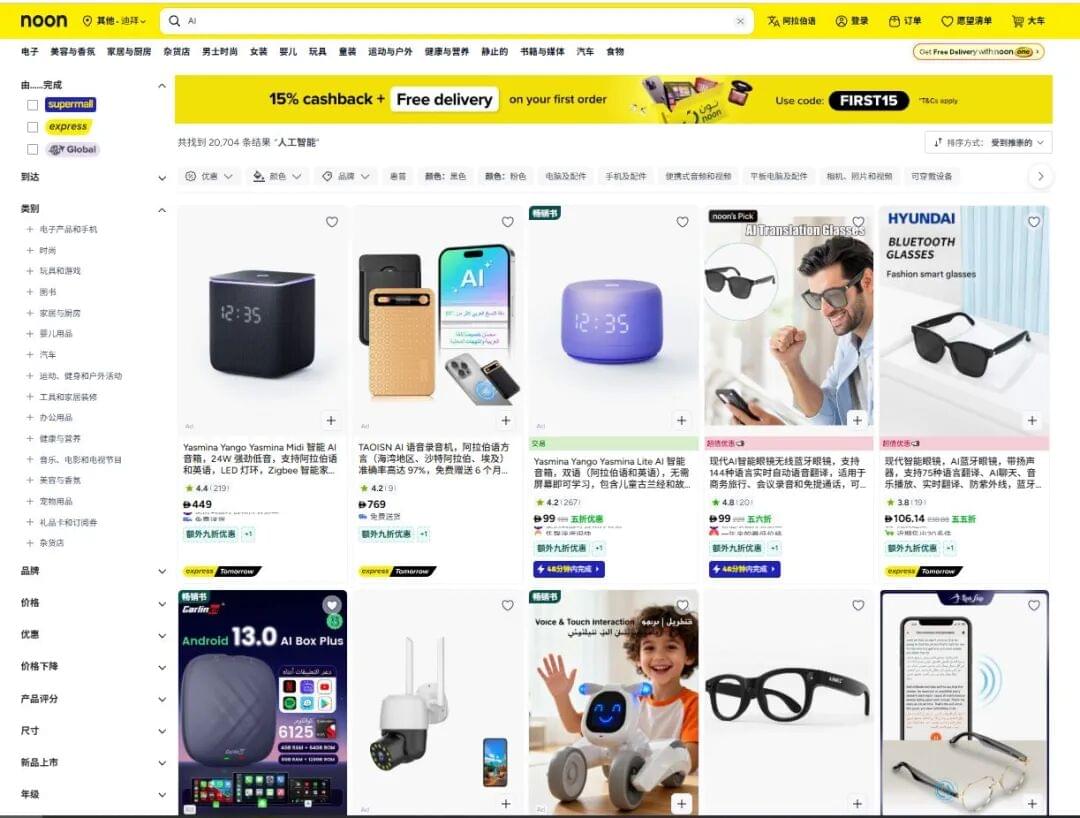
The market reaction is clear. The Middle East smart home market was valued at over $10 billion in 2025 and is expected to grow to nearly $30 billion by 2031, with an annual growth rate of nearly 19%. The Middle East Home Appliance & Electronics Exhibition, themed "Smart Everything", featured around 300 Chinese companies showcasing AI‑driven smart home ecosystems and energy‑efficient appliances. Major home appliance brands are betting heavily on AI — the question is no longer "whether to do it", but "who can do it faster and better".
Ultimately, when AI helps people save money, time, and worry, it ceases to be a selling point that needs explanation and becomes a natural selection criterion for consumers. The changes in the Middle East market may only be the beginning — as technology truly solves concrete life problems, "AI+" will shift from being a nice‑to‑have to a table stake.

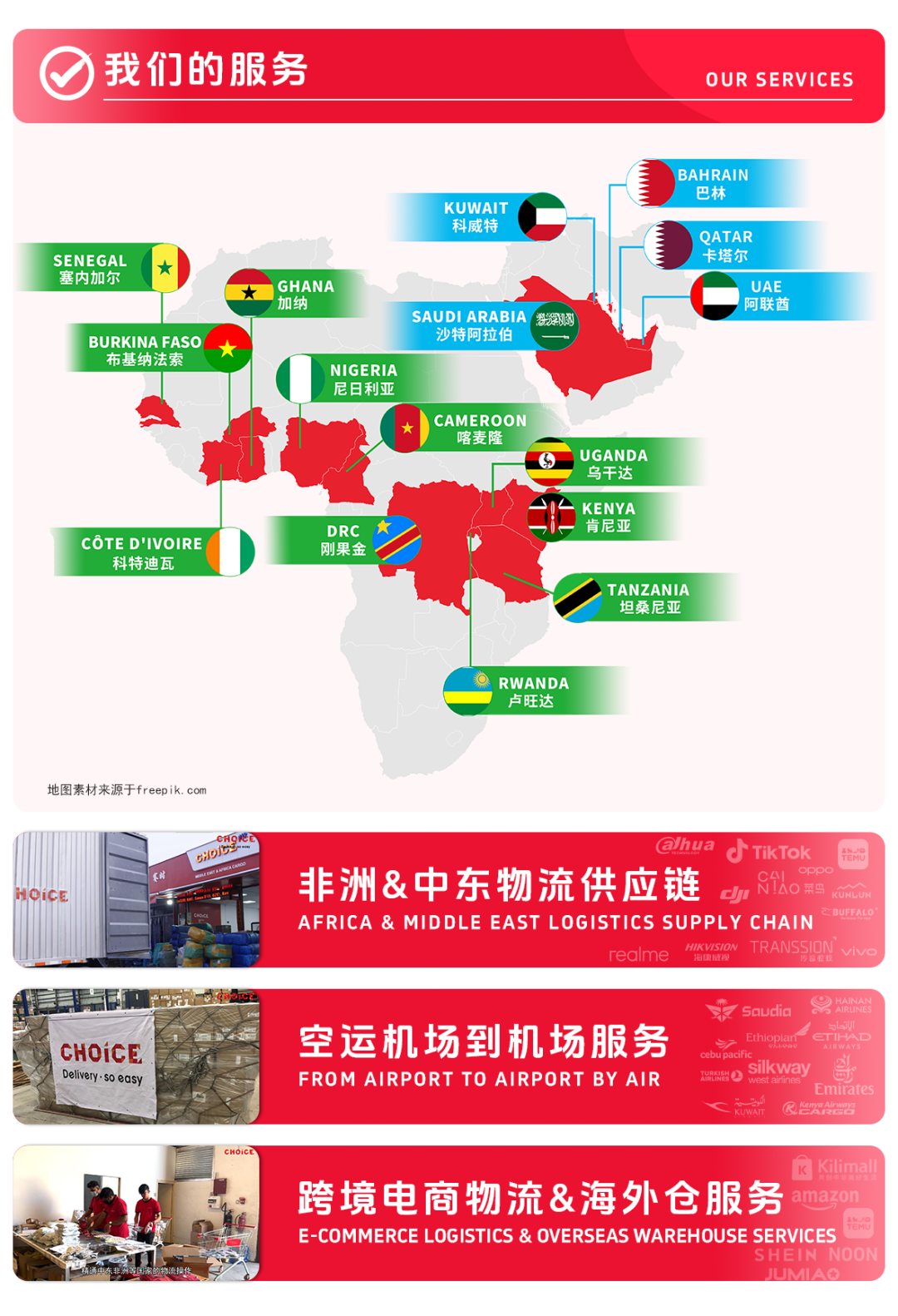



CHOICE International Freight, focusing on cross-border logistics in Africa & the Middle East. Founded in 1997, with 29 years of logistics experience, it provides one-stop cross-border logistics services such as air transportation, sea transportation, and overseas warehousing.
Tel: 400-613-8844