Preface
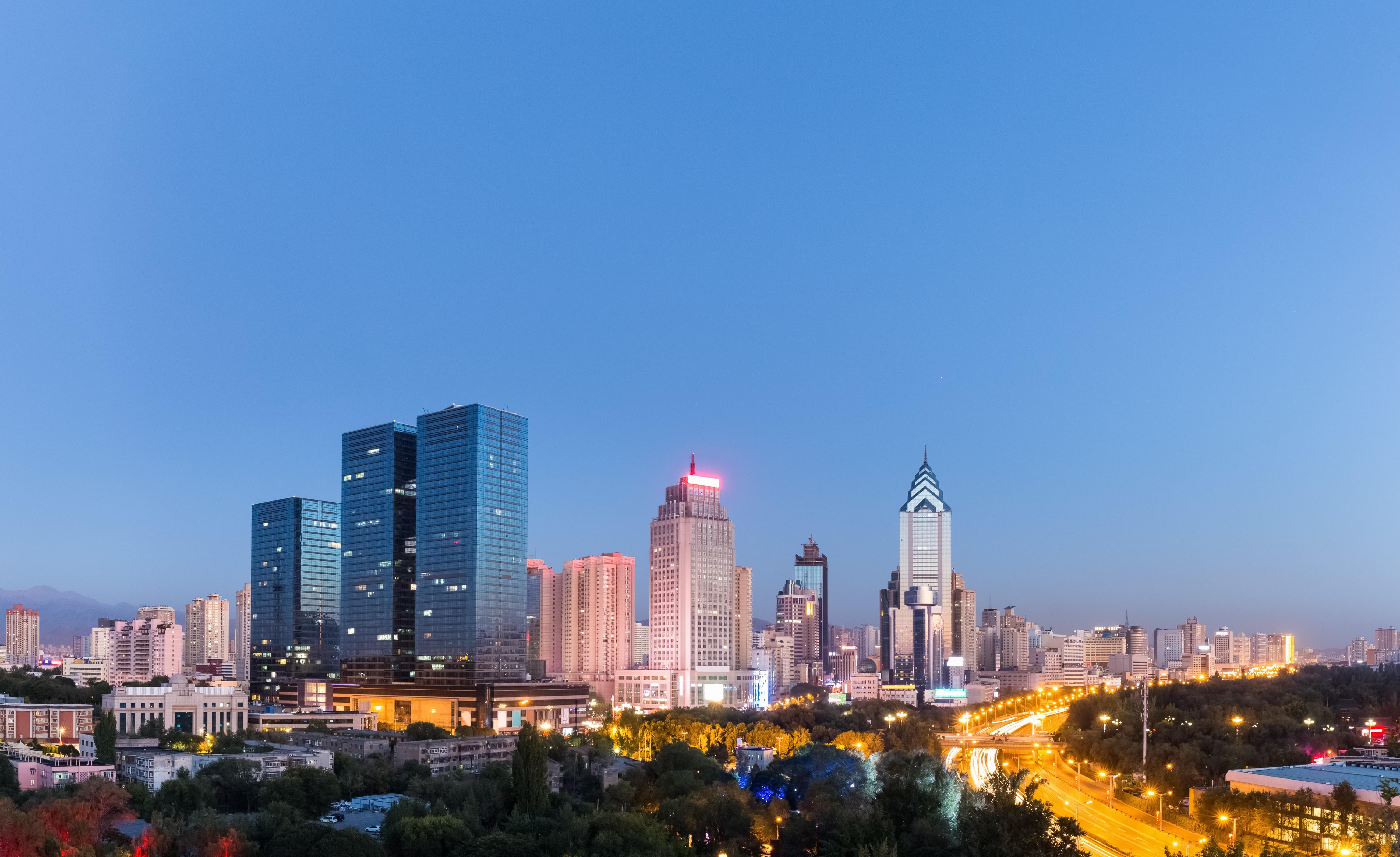
This vast region, which makes up one-sixth of China’s land area, is beginning to show its true strategic weight.
What is your first impression of Xinjiang?
Is it extra-sweet Hami melons, endless deserts, or a remote travel destination?
In just a few years, Xinjiang has transformed from a remote frontier into the front line of foreign trade. It has also become a strategic base for industry giants like BYD, Huawei, Alibaba, and LONGi.
According to customs statistics, in 2025, Xinjiang’s total foreign trade reached 520.37 billion yuan, ranking first in China in terms of growth rate, with active trade links established with 228 countries and regions.
How did a region that is neither a traditional manufacturing hub nor a coastal port achieve such explosive growth? And what does this rise actually mean for businesses?
01
The Gateway to the West
A quick look at the map makes Xinjiang’s position clear: it sits at the heart of China’s overland routes to Europe and serves as a key hub of the Eurasian Land Bridge under the Belt and Road Initiative.
As China’s western gateway, Xinjiang naturally excels in cargo transit and distribution.
As geopolitical risks rise, supply chain security and delivery speed have become just as important as shipping costs.
Xinjiang’s 19 national first-class ports form a highly reliable transport network:
-
14 highway ports (such as Alashankou, Horgos, and Torugart) create a busy, 24/7 cross-border road transport network.
-
2 railway ports (Alashankou and Horgos railway stations) serve as the main channels for China-Europe freight trains.
-
3 air ports (centered around Urumqi Tianshan International Airport) operate 37 international cargo routes, connecting to 36 cities in 22 countries and regions.
Amid geopolitical tensions and fierce coastal competition, safety and timeliness now matter as much as cost—instantly highlighting the Xinjiang corridor's value.
02
Industrial Development
If Xinjiang were only a transit point where goods pass through, its trade value would be limited.
The real secret to its boom is that it combines its geographic location with another major advantage: exceptionally low energy costs.
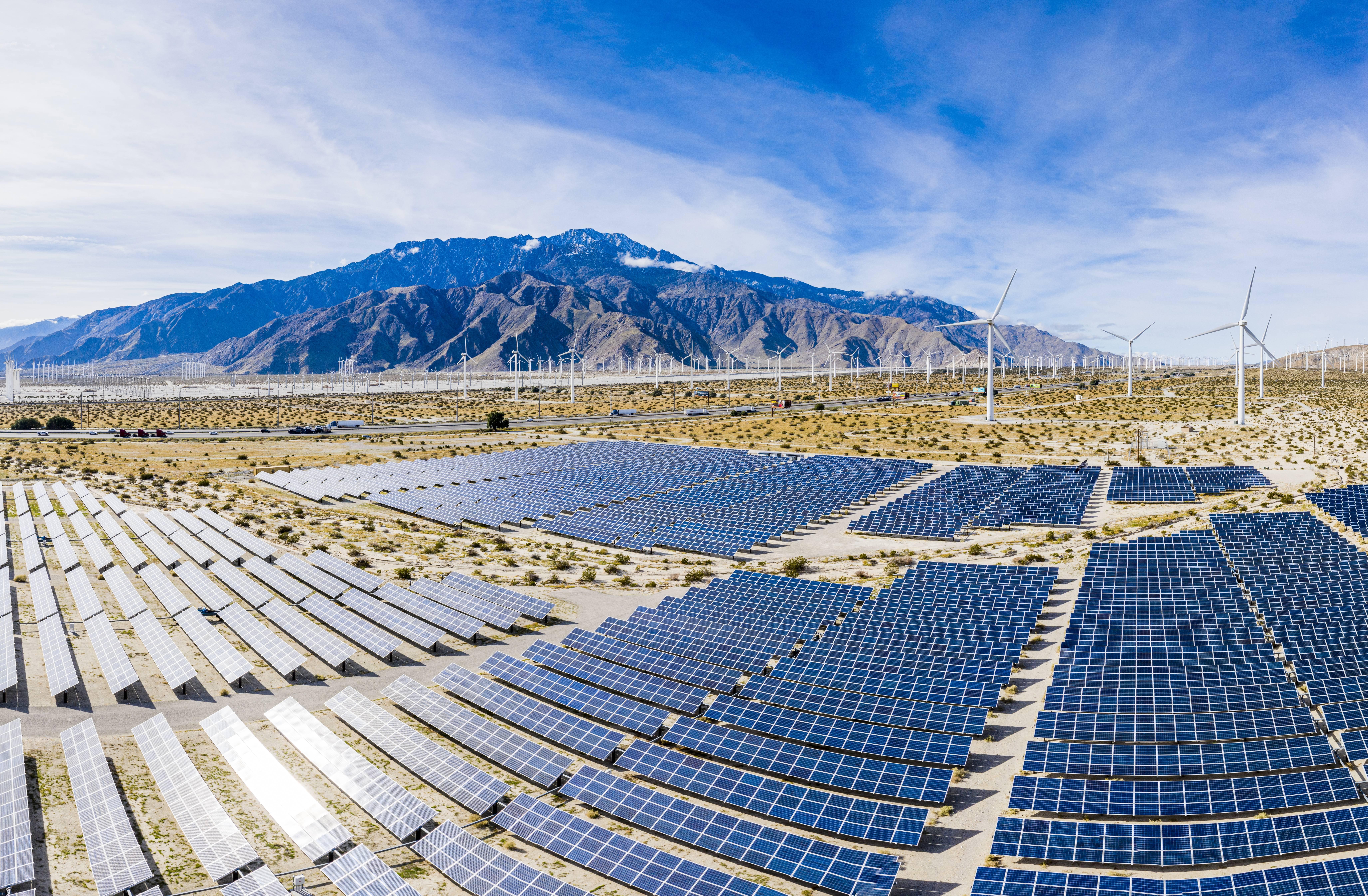
Xinjiang’s installed renewable energy capacity has surpassed 170 million kilowatts, the most in China. With abundant wind and solar resources, its clean, cheap green electricity costs just one-third of coastal regions—making it a powerful magnet for manufacturers.
-
BYD has set up a new energy vehicle (NEV) production base in Urumqi, along with supporting battery supply chains.
-
Alibaba Cloud has built data centers here, securing a key position in China’s western computing network.
-
GCL, Tongwei, and LONGi (the three solar giants) have all made major investments in polysilicon production in Xinjiang. Today, the region produces over 40% of China’s total polysilicon.
This has created a highly efficient "East Coast R&D + Xinjiang Manufacturing" model. Eastern coastal areas handle design, branding, and global sales, while energy-intensive processing and heavy manufacturing take place directly in Xinjiang.
Products made with Xinjiang’s low-cost green power can leave the factory gates and arrive in Central Asia, the Middle East, or Africa in just a few days via direct logistics routes.
The numbers prove this trend: In 2025, Xinjiang’s exports of mechanical and electrical products reached 186.5 billion yuan. Among these, exports of automobiles and parts grew by 16.7% year-on-year, electrical equipment by 22.1%, and electronic components surged by 48.1%.
03
A Strategic Springboard to Africa and the Middle East
One specific figure in Xinjiang’s trade report stands out:
In the first five months of 2026, Xinjiang’s trade with countries involved in the Belt and Road Initiative reached 190.2 billion yuan, accounting for 88.1% of its total trade. Specifically, its trade with ASEAN and Africa reached 36.91 billion yuan and 23.23 billion yuan, growing by 9.7% and 107.5% year-on-year, respectively.
Behind this 107.5% surge in trade with Africa is Xinjiang’s rise as a “hidden springboard” connecting Chinese factories directly to the Middle East and Africa.
From a geographical and aviation standpoint, Urumqi is closer to key western markets. The flight distance from Urumqi Tianshan International Airport to Dubai and Addis Ababa is nearly one-third shorter than starting from Guangzhou or Shenzhen.
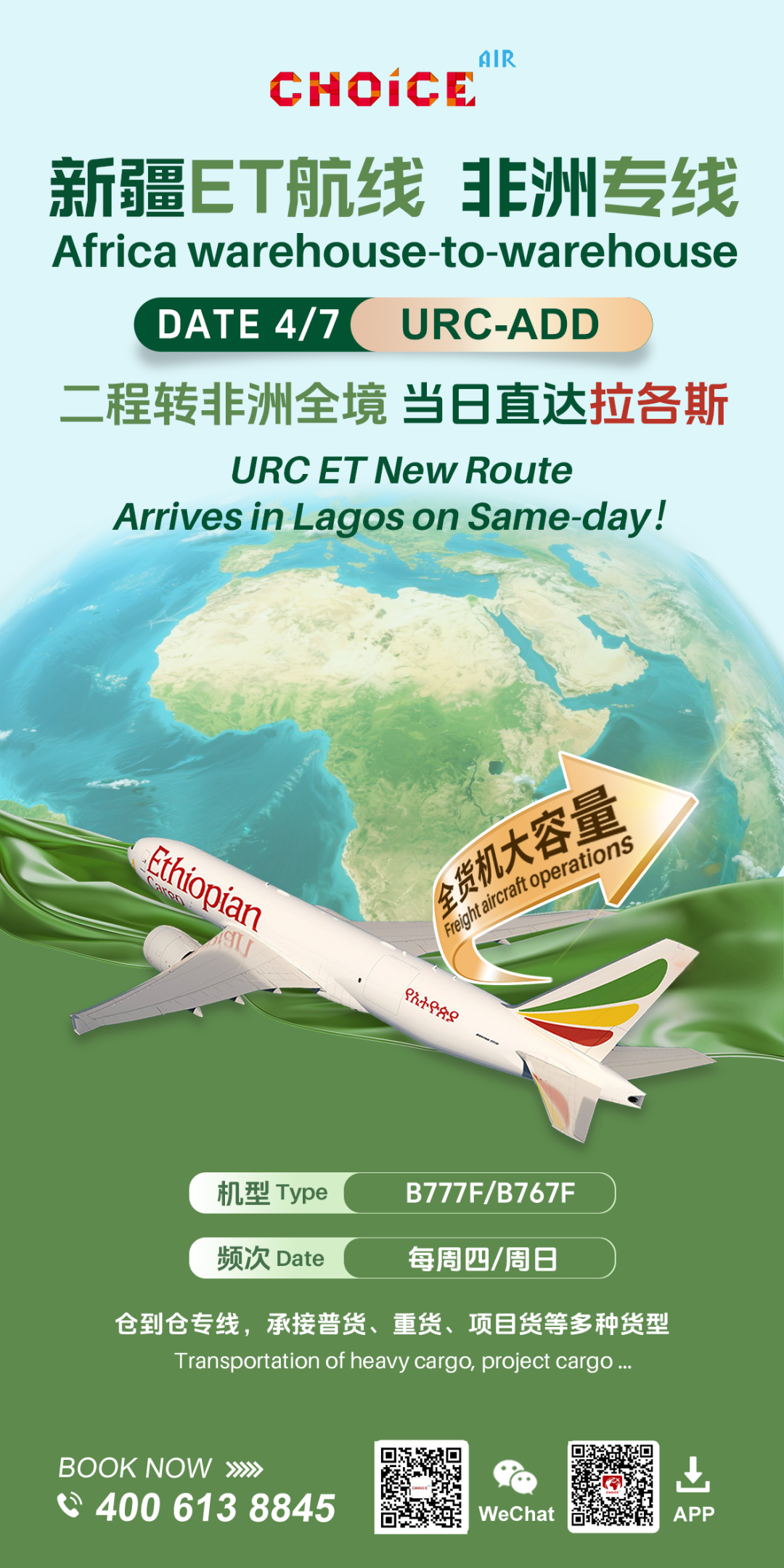
With the launch of the Urumqi - Addis Ababa cargo route, Xinjiang has established a direct air cargo line to Africa. For high-value and time-sensitive goods.
In terms of speed: Direct flights to East Africa cut delivery time by nearly half compared to traditional sea freight.
In terms of route efficiency: Instead of transporting goods from western China all the way east to coastal ports first, shipping directly from Xinjiang reduces comprehensive transit and time costs by nearly 20%.
Combined with policy support from the Xinjiang Free Trade Zone, new business formats like cross-border e-commerce are taking off rapidly.
Beyond saving time and money, this westward channel cuts over-reliance on sea lanes and strengthens supply-chain security. Xinjiang will grow from a transit route into an industrial hub, linking China’s inland manufacturing directly to the expanding Middle East and Africa markets.

Xinjiang’s sudden rise is no longer about selling local specialties from a remote frontier. It’s a supply-chain symphony spanning Eurasia and Africa, built on green electricity and boosted by its border ports.
For every go-global player seeking new growth and an escape from cut-throat competition on traditional shipping routes, this land covering one-sixth of China is an unmissable opportunity and a golden corridor.

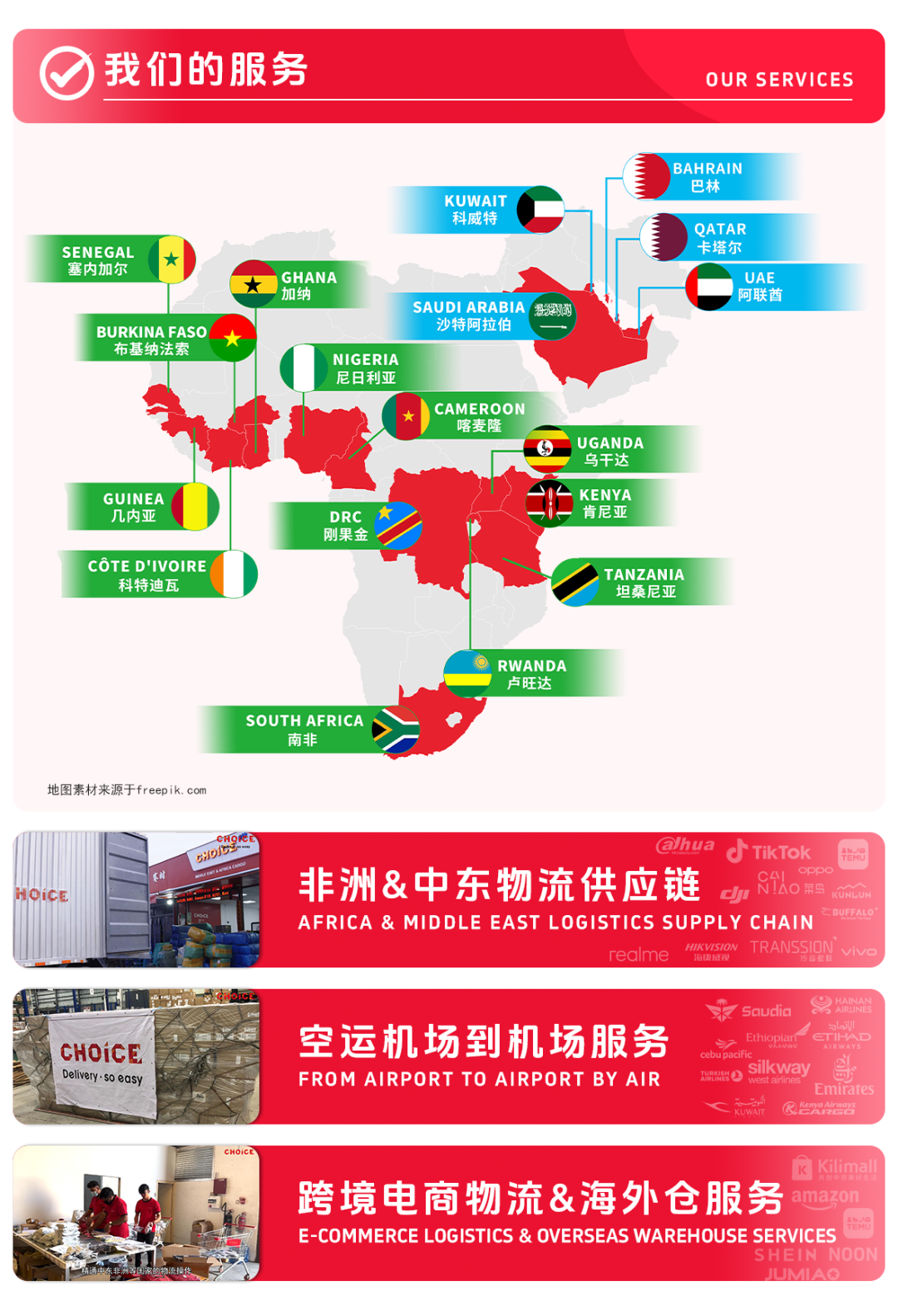

CHOICE International Freight, focusing on cross-border logistics in Africa & the Middle East. Founded in 1997, with 29 years of logistics experience, it provides one-stop cross-border logistics services such as air transportation, sea transportation, and overseas warehousing.
Tel: 400-613-8844