
Preface
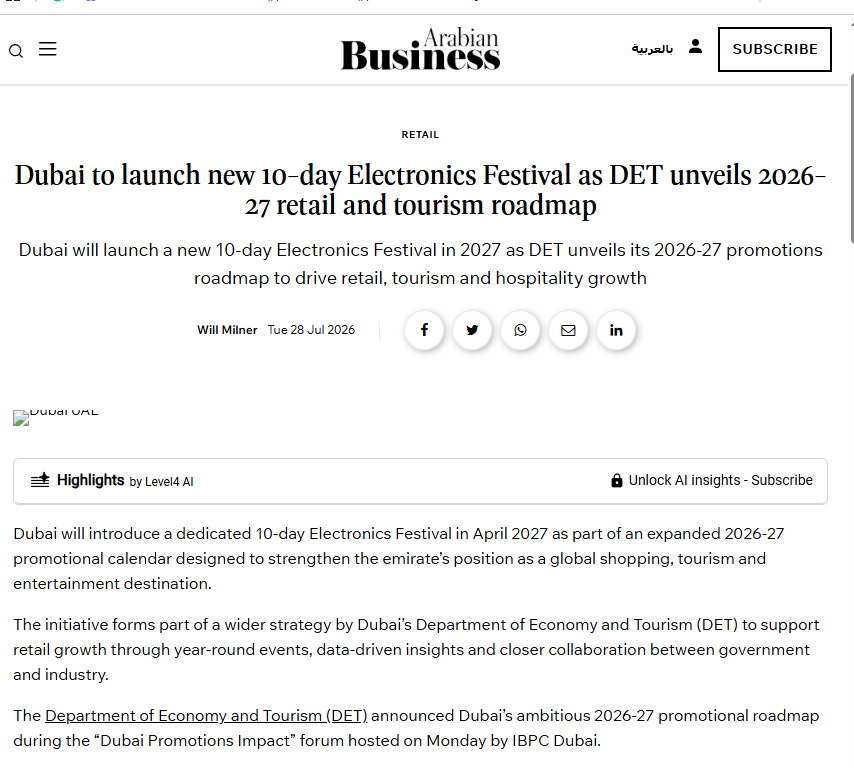
Dubai to launch new 10-day Electronics Festival.
Dubai Customs Introduces AED 1,000 Duty Exemption for Cross-Border E-Commerce.
Dubai has recently sent out two signals that cross-border sellers should pay close attention to.
On one side, Dubai Customs has reduced the import duty burden for eligible low-value cross-border parcels. On the other, Dubai plans to launch its first dedicated Electronics Festival in April 2027.
With policy support and consumer activity moving in the same direction, Dubai is sending a clear message:
To become a regional hub for electronic products and cross-border e-commerce.
According to reports, Dubai’s Department of Economy and Tourism will launch a 10-day Electronics Festival in April 2027.
This will be Dubai’s first shopping festival focused specifically on electronics. Similar in positioning to the former GITEX Shopper event, it is expected to boost sales of mobile phones, computers, smart devices, earphones, speakers, home appliances, and other consumer electronics through focused promotions, brand events, and shopping experiences.
Why is Dubai creating a dedicated festival for electronics?
The market is ready for it.
The Middle East has a young population, and smartphone penetration is above 90%. Consumers are also highly open to new products such as smart wearables, audio devices, and small home appliances. Many of these categories have maintained double-digit growth for years.
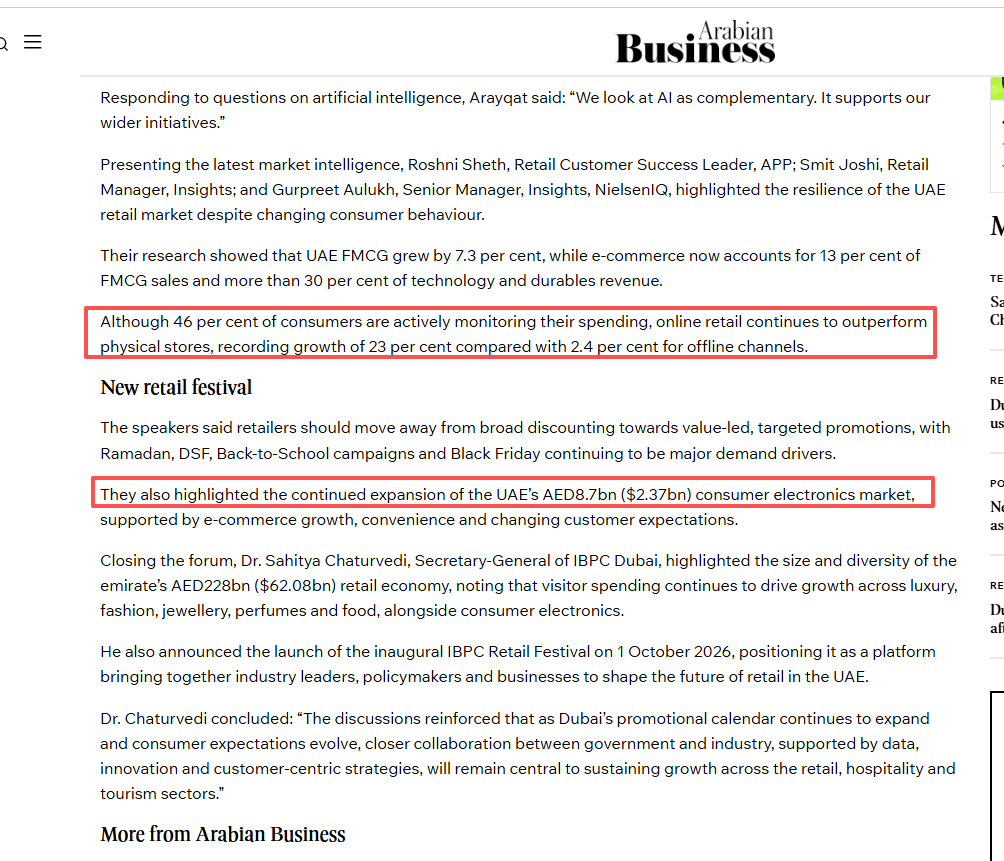
The UAE consumer electronics market is estimated at around AED 8.7 billion.
This means the new festival is not just another mall promotion. It is an officially backed annual shopping event that could directly drive stock preparation, channel planning, and a concentrated release of consumer spending.
More Pricing Room for Small Consumer Electronics
Under Dubai Customs Declaration Regulation No. 16 of 2026, cross-border goods valued at AED 1,000 or below will be exempt from import duty from August 3, 2026, except for tobacco and certain special goods.
AED 1,000 is roughly equal to USD 272.
This means many lower-priced electronics, such as earphones, smartwatches, mobile accessories, small home appliances, and digital accessories, may have lower overall import costs and clearer pricing advantages when entering the Dubai market.
However, one point must be made clear:
Exemption from import duty does not mean that all taxes and fees are removed.
Whether a product is still subject to VAT, platform fees, courier charges, customs clearance service fees, product certification, or other import compliance requirements depends on the product itself and the actual sales channel.
In other words, this policy reduces part of the import cost. It does not mean that every product can simply be shipped into Dubai “tax-free” without further checks.
Looking at these two developments together, Chinese electronics sellers may see several important changes.
1. Small, high-value, time-sensitive products may become more competitive
Products such as Bluetooth earphones, smart wearables, phone accessories, gaming accessories, and portable small appliances are well suited to cross-border e-commerce in Dubai.
Their unit value is usually manageable, while local consumers are often more sensitive to new products and fast delivery.
2. The festival may create concentrated demand for stock and shipping
During the festival period, platforms, brands, and local retailers may prepare inventory in advance.
This type of cargo places greater demands on transit times, cargo space and delivery reliability.
3. Dubai is more than just the Dubai market
Dubai’s value lies in its connection to the wider Gulf region.
For many Chinese brands, Dubai can serve as a test market for the Middle East. They can first test product fit, pricing, marketing content, and customer response in Dubai, then gradually expand into Saudi Arabia, Oman, Qatar, Kuwait, Bahrain, and other nearby markets.

The Electronics Shopping Festival may create a surge in demand, while the duty exemption may make low-value cross-border goods more attractive.
But when shipping electronics by air, sellers still need to check:
-
Whether the product contains lithium batteries
-
Whether battery capacity and transport documents meet air freight requirements
-
Whether products such as earphones, speakers, or motors require magnetic testing
-
Whether the product is subject to wireless, telecom, or local certification requirements
-
Whether the declared product name, value, quantity, and brand information are accurate
-
Whether cargo space and transport arrangements can be secured before the sales peak
Policy benefits do not mean sellers can underdeclare value or split shipments to avoid customs rules.
The businesses that will benefit in the long term are those with compliant products, accurate declarations, and stable fulfillment.

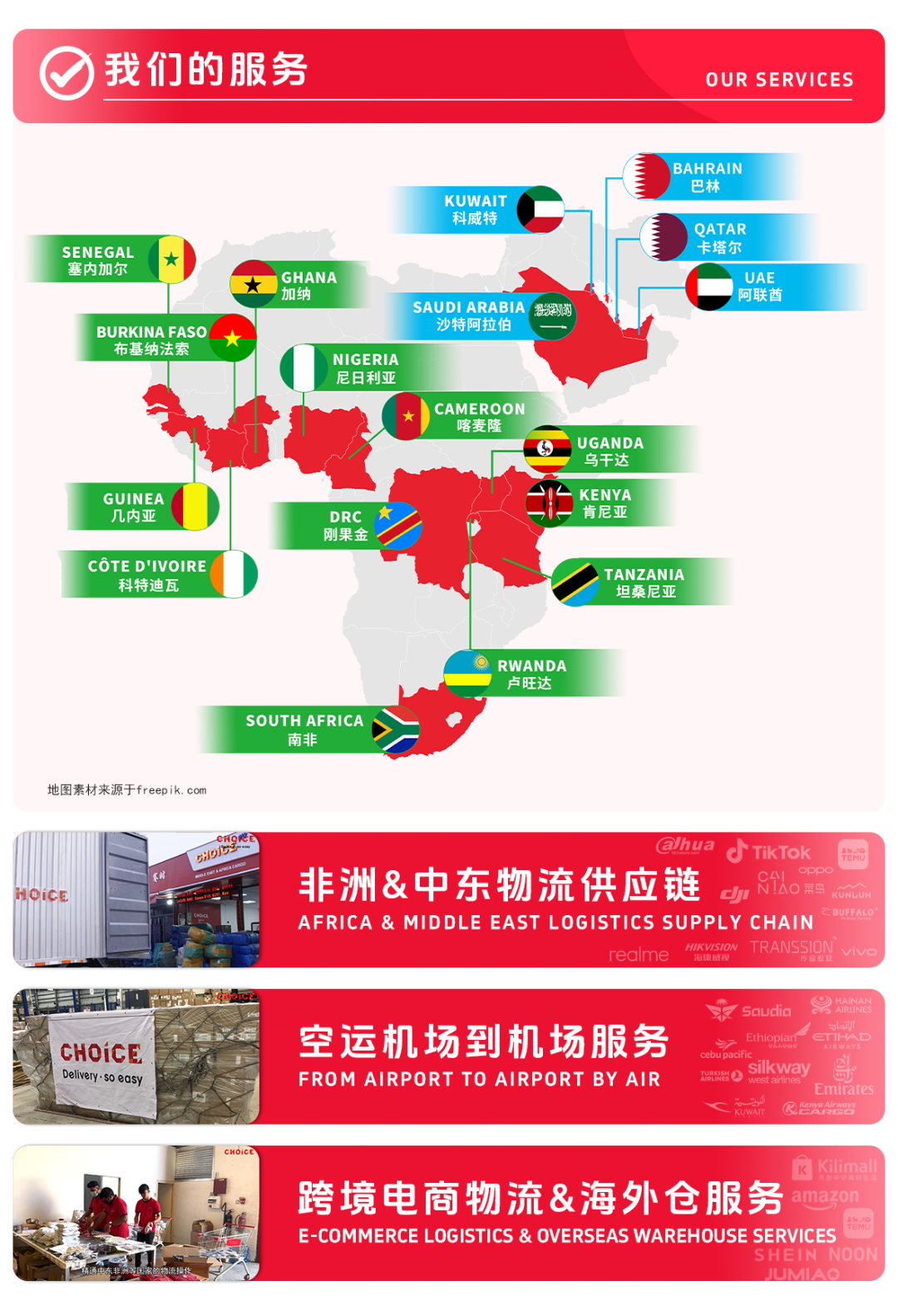

CHOICE International Freight, focusing on cross-border logistics in Africa & the Middle East. Founded in 1997, with 29 years of logistics experience, it provides one-stop cross-border logistics services such as air transportation, sea transportation, and overseas warehousing.
Tel: 400-613-8844